Saturday, April 1, 2017
Announcing the 2018 Israel Study Tour
I am happy to announce that Briercrest College and Seminary is planning a study tour to Israel in the spring of 2018. The 13-day trip will be hosted by my colleague, Dr. Wes Olmstead, and led in Israel by Yoni Gerrish, the director of JCF Biblical Study Tours. We know from past experience on our 2009 and 2011 study tours that Yoni is an outstanding guide.
The tour will begin in the south of Israel with stops in Beersheba and Eilat on the Red Sea, as well as several hikes, including one through the Zin Canyon pictured on your left. The group will then progress north along the Dead Sea, and then across to the Mediterranean Sea, before settling in for several nights at a Kibbutz Hotel on the Sea of Galilee, as a base for day trips around the Sea of Galilee and the Golan Heights. (For those who like swimming, this means you will have the chance to swim in the Red Sea, Dead Sea, Mediterranean Sea and the Sea of Galilee.) After touring Israel from south to north, the final four days will be based out of Jerusalem.
For more information, including a more detailed itinerary, see the tour website: http://briercrest.ca/israeltour/.
If you are in the Caronport area, please plan to attend our information meeting this Wednesday, April 5, at 6:30 p.m. in Room 144.
The trip will be a fantastic experience, and I was very much looking forward to going along. Something else has come up for our family, however, about which I may say more in due course. (Update: More here)
Wednesday, February 15, 2017
Ten-Year Blog Anniversary
Ten years ago today I published the first entry on גֵּר־וְתוֹשָׁב. I initially conceived of it as a commonplace book, and took pride in the fact that the blog with an obscure Hebrew name went entirely unnoticed by the wider world.
In time my initial blog description gave way to the quote from Robert Frost that still appears in the sidebar:
At some point early on I articulated to myself a principle of self-censorship that I admit I have not always followed successfully: Say positive things.
And somewhere along the line I decided to prioritize embodied life over virtual reality, a decision I don't regret. A glance at my blog archive indicates when this change occurred: During its first four years, the blog averaged over 100 posts / year. In 2011, that number dropped to 65. Between 2012-2016 the average was in the low 30's.
10 years, 697 posts, and 300,000+ hits later, there is no shortage of topics I would like to blog and write about. At the beginning of the year, I pinned this advice by Jay Parini on my office bulletin board:
In time my initial blog description gave way to the quote from Robert Frost that still appears in the sidebar:
But yield who will to their separation, / My object in living is to unite / My avocation and my vocation / As my two eyes make one in sight. / Only where love and need are one, / And the work is play for mortal stakes, / Is the deed ever really done / For Heaven and the future's sakes.At its best, what I post here represents the meeting of my avocation and vocation--with an emphasis on the former. I do like readers, of course, but have neither the time nor the energy to cultivate a particular audience. Nor is the blog an extension of my day job. What gets said in this writing space appears when I have something to say on any number of mostly Biblical-Studies-related topics, and when saying it either fits in with an active writing project or feels like a break from my day-to-day routine.
At some point early on I articulated to myself a principle of self-censorship that I admit I have not always followed successfully: Say positive things.
And somewhere along the line I decided to prioritize embodied life over virtual reality, a decision I don't regret. A glance at my blog archive indicates when this change occurred: During its first four years, the blog averaged over 100 posts / year. In 2011, that number dropped to 65. Between 2012-2016 the average was in the low 30's.
10 years, 697 posts, and 300,000+ hits later, there is no shortage of topics I would like to blog and write about. At the beginning of the year, I pinned this advice by Jay Parini on my office bulletin board:
- Don’t stop. You have to write a lot to get better at writing.
- Write every day. If you must, get up early. An hour each day is enough. Write, revise, and write some more. And don’t hesitate to use those weird little gaps in the day. I often have huge luck with a spare 20 minutes.
- Don’t fuss. Don’t think you have to be at your desk in a quiet place.
- If you stick to your writing, it will stick to you.
Friday, January 6, 2017
Why study 1 Corinthians
As I mentioned back in October, I will be teaching a 300-level course on Paul's first letter to the Corinthians this semester. In the syllabus, I make a case for studying the letter this way:
Paul’s first letter to the Corinthians is a valuable resource for readers who wish to recover evidence for day-to-day church life in the mid-first-century CE, but the relative abundance of historical data in 1 Corinthians also poses a challenge. Of all Paul’s letters, 1 Corinthians may strike modern readers as the most firmly embedded in an alien historical setting. Reading 1 Corinthians well as a historical document demands more than tracing Paul’s argument; readers must also learn about the archaeology of ancient Corinth, the social and religious beliefs and practices of first-century Jews, Greeks and Romans, and the conventions of ancient rhetoric.
The challenge of reconstructing the letter’s context is matched by the demands of its contents. Paul’s instructions are sometimes challenging because they seem obviously and uncomfortably relevant. They address issues—like church unity, sexual morality and the practice of spiritual gifts—with which the twenty-first-century church continues to struggle. Sometimes they are challenging because the topics, such as head coverings and food sacrificed to idols, seem foreign to contemporary concerns and cultural norms; sometimes they seem equally familiar and foreign at the same time.
Readers who seek to read 1 Corinthians faithfully as Christian Scripture must be alert to the ways in which their own horizons of experience and their own preferences shape and constrain their interpretations. They must also face the hermeneutical challenge of applying what Paul says to their own twenty-first-century contexts. These challenges make 1 Corinthians a fascinating and rewarding subject of study.
In this class we will draw on all the interpretive resources at our disposal to read 1 Corinthians carefully in its historical context, and to consider its implications for contemporary readers.
By the end of this course, students will be able to articulate an understanding of the letter’s purpose, summarize its content, trace its flow of thought, and explain how Paul responds theologically to practical questions. They will be familiar with a range of options in the interpretation of key texts and be able to illustrate how knowledge of the socio-historical context of the letter affects its interpretation. They will also be able to describe hermeneutical challenges posed by the text, and be better prepared to engage it seriously as Christian Scripture.
A copy of the full syllabus is available online here.
Paul’s first letter to the Corinthians is a valuable resource for readers who wish to recover evidence for day-to-day church life in the mid-first-century CE, but the relative abundance of historical data in 1 Corinthians also poses a challenge. Of all Paul’s letters, 1 Corinthians may strike modern readers as the most firmly embedded in an alien historical setting. Reading 1 Corinthians well as a historical document demands more than tracing Paul’s argument; readers must also learn about the archaeology of ancient Corinth, the social and religious beliefs and practices of first-century Jews, Greeks and Romans, and the conventions of ancient rhetoric.
The challenge of reconstructing the letter’s context is matched by the demands of its contents. Paul’s instructions are sometimes challenging because they seem obviously and uncomfortably relevant. They address issues—like church unity, sexual morality and the practice of spiritual gifts—with which the twenty-first-century church continues to struggle. Sometimes they are challenging because the topics, such as head coverings and food sacrificed to idols, seem foreign to contemporary concerns and cultural norms; sometimes they seem equally familiar and foreign at the same time.
Readers who seek to read 1 Corinthians faithfully as Christian Scripture must be alert to the ways in which their own horizons of experience and their own preferences shape and constrain their interpretations. They must also face the hermeneutical challenge of applying what Paul says to their own twenty-first-century contexts. These challenges make 1 Corinthians a fascinating and rewarding subject of study.
In this class we will draw on all the interpretive resources at our disposal to read 1 Corinthians carefully in its historical context, and to consider its implications for contemporary readers.
By the end of this course, students will be able to articulate an understanding of the letter’s purpose, summarize its content, trace its flow of thought, and explain how Paul responds theologically to practical questions. They will be familiar with a range of options in the interpretation of key texts and be able to illustrate how knowledge of the socio-historical context of the letter affects its interpretation. They will also be able to describe hermeneutical challenges posed by the text, and be better prepared to engage it seriously as Christian Scripture.
A copy of the full syllabus is available online here.
Wednesday, January 4, 2017
Bruce Longenecker's Lost Letters of Pergamum
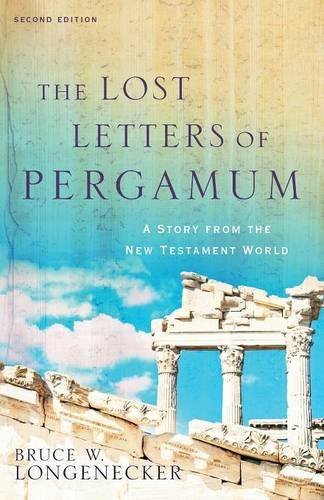
Bruce Longenecker made my job a little easier last semester, by writing a great little book that students enjoy reading. I assigned the second edition of Longenecker's Lost Letters of Pergamum (Baker Academic, 2016) as a textbook for "Introduction to the New Testament," and students loved it.
Perhaps Baker Academic will consider adding these student blurbs to the back of the third edition:
A few students apparently neglected to read the preface, which explains that the letters are fictional:
But how often do you find a textbook that prompts this sort of student response?
Based on student feedback I decided to switch out the other two very short introductions I had assigned, but Lost Letters is a keeper - It succeeds in conveying a lot of information about the first-century Roman world, it paints a compelling and attractive picture of early Christian community practices, and--did I mention?--students enjoy reading it.
Perhaps Baker Academic will consider adding these student blurbs to the back of the third edition:
"Extremely interesting!"
"Loved this book, eye-opening, never read Luke the same."
"Really enjoying The Lost Letters of Pergamum book so far!"
A few students apparently neglected to read the preface, which explains that the letters are fictional:
"The Lost Letters I found pretty cool how I'm able to read letters from a very old historical event."
"I am really enjoying Longenecker's book because it includes actual letters of Luke, Antipas, Calpurnius. It gives a glimpse at life in the New Testament times and is extremely interesting."
But how often do you find a textbook that prompts this sort of student response?
"Longenecker is by far my favourite thing I've read this whole semester. I was interested from page one. It's the best."
Based on student feedback I decided to switch out the other two very short introductions I had assigned, but Lost Letters is a keeper - It succeeds in conveying a lot of information about the first-century Roman world, it paints a compelling and attractive picture of early Christian community practices, and--did I mention?--students enjoy reading it.
Sunday, January 1, 2017
Joseph Fitzmyer (1920-2016)
If I were still maintaining my rather-too-morbid list of Nonagenarian New Testament Scholars, Joseph Fitzmyer would have been on it. He died on December 24, at the age of 96.
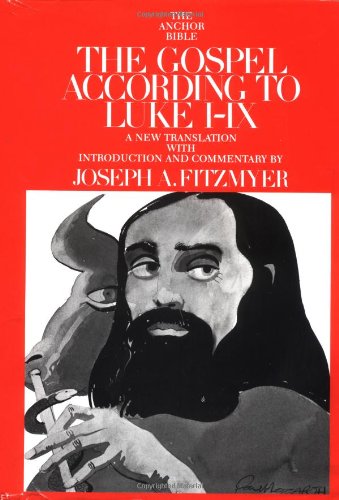
I only knew Fitzmyer through his scholarship. I first encountered his classic two-volume Anchor Bible commentary on the Gospel of Luke in grad school. Published in 1981 and 1985 when Fitzmyer was in his 60's, I still regard it as one of the top three or four English-language commentaries on Luke.
I read Fitzmyer's Spiritual Exercises Based on Paul's Epistle to the Romans (Grand Rapids: Eerdmans, 1995), in 2006 as I was preparing to teach Romans for the first time, and found it very helpful. Fitzmyer's major Romans commentary (AB, 1993) created a stir when it came out because the Roman Catholic scholar's exposition of justification by faith sounded so Protestant.
There followed the Anchor Bible commentary on Acts (1998), a disappointment to the seventy-eight-year-old Fitzmyer, who had wanted to publish a major two-volume treatment to match his commentary on Luke, but was forced by the publisher to limit the commentary to a single volume.
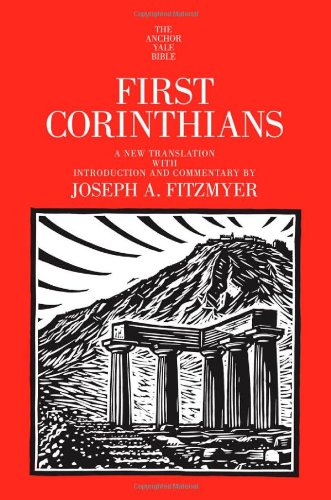
I confess that I find Fitzmyer's Acts commentary a bit thin, and I typically turn to other commentaries on Romans first, so I was surprised and delighted when I recently acquired Fitzmyer's 2008 Anchor Yale Bible commentary on First Corinthians and discovered that it is a gem. My initial impression is that it is one of the best recent treatments of the letter--thorough, up-to-date and incisive. I expect to consult it regularly as I prepare to teach 1 Corinthians this semester. As far as I can tell, First Corinthians was Fitzmyer's last major work. Not bad for an 88-year-old.
Perhaps as remarkable as Fitzmyer's longevity and scholarly productivity during the final four decades of his life is the fact that his doctorate was not in New Testament at all. Fitzmyer earned his Ph.D. in Semitics from Brown University in 1956, and made major contributions to scholarship in Aramaic, early Judaism, and the Dead Sea Scrolls.
For more on Fitzmyer's life and work, see the collection of remembrances at America Magazine: "Remembering Joseph Fitzmyer, S.J." as well as this fine tribute by Lawrence Schiffman, delivered in 2001; the wikipedia entry on Fitzmyer is also very good.
I only knew Fitzmyer through his scholarship. I first encountered his classic two-volume Anchor Bible commentary on the Gospel of Luke in grad school. Published in 1981 and 1985 when Fitzmyer was in his 60's, I still regard it as one of the top three or four English-language commentaries on Luke.
I read Fitzmyer's Spiritual Exercises Based on Paul's Epistle to the Romans (Grand Rapids: Eerdmans, 1995), in 2006 as I was preparing to teach Romans for the first time, and found it very helpful. Fitzmyer's major Romans commentary (AB, 1993) created a stir when it came out because the Roman Catholic scholar's exposition of justification by faith sounded so Protestant.
There followed the Anchor Bible commentary on Acts (1998), a disappointment to the seventy-eight-year-old Fitzmyer, who had wanted to publish a major two-volume treatment to match his commentary on Luke, but was forced by the publisher to limit the commentary to a single volume.
I confess that I find Fitzmyer's Acts commentary a bit thin, and I typically turn to other commentaries on Romans first, so I was surprised and delighted when I recently acquired Fitzmyer's 2008 Anchor Yale Bible commentary on First Corinthians and discovered that it is a gem. My initial impression is that it is one of the best recent treatments of the letter--thorough, up-to-date and incisive. I expect to consult it regularly as I prepare to teach 1 Corinthians this semester. As far as I can tell, First Corinthians was Fitzmyer's last major work. Not bad for an 88-year-old.
Perhaps as remarkable as Fitzmyer's longevity and scholarly productivity during the final four decades of his life is the fact that his doctorate was not in New Testament at all. Fitzmyer earned his Ph.D. in Semitics from Brown University in 1956, and made major contributions to scholarship in Aramaic, early Judaism, and the Dead Sea Scrolls.
For more on Fitzmyer's life and work, see the collection of remembrances at America Magazine: "Remembering Joseph Fitzmyer, S.J." as well as this fine tribute by Lawrence Schiffman, delivered in 2001; the wikipedia entry on Fitzmyer is also very good.
Friday, December 16, 2016
Jerome Murphy O'Connor on Taking Statements as Questions
"The more conscious I became of the way theological thought actually develops--by historically conditioned insights rather than by logical deduction from a deposit of faith--the more I wanted to encounter the personality behind the letters [of Paul], and to determine the factors which led him to think in a particular way. This book contains the fruits of that quest, which are displayed with a certitude that all historians will recognize as spurious. Only definiteness, however, can provoke the reactions that in dialogue lead to progress. I make my own what J.A.T. Robinson said in the conclusion to a much more challenging work, 'all the statements of this book should be taken as questions.'" - Jerome Murphy-O'Connor, Paul: A Critical Life (Oxford, 1997), v.
The J.A.T. Robinson reference is to Redating the New Testament (London: SCM, 1976), 357.
Monday, November 14, 2016
The 'Prophet like Moses' and Josephus's Aristocratic Ideal
A week from today, on the morning of Monday, November 21st, I am scheduled to present my second SBL paper, this time in the Hebrew Bible and Political Theory section (S21-128). This paper is on the influence of Deuteronomy 18 on Josephus's political philosophy. Because Josephus never directly quotes the chapter, it is in the first place an argument that Josephus read Deuteronomy 18, and that it influenced his writing of the Antiquities. Here is the abstract:
Josephus’s stated preference for an aristocratic form of government in Antiquities 4.223 is often understood in terms of the priestly aristocracy of Josephus’s early life in Jerusalem. Yet while Josephus’s description of first-century Judean political life and his other forays into Greco-Roman political discourse are important evidence for his political philosophy, interpreting Antiquities 4.223 merely as a reference to priestly aristocracy overlooks the function of 4.223 in its immediate context. Josephus’s claim that “aristocracy is indeed the best” contrasts rule by kings—criticized in Deuteronomy 17 and by Josephus in Antiquities 4.223-4—with a different form of government summarized in Antiquities 4.214-218. This passage, the first direct comment about rulers in Josephus’s account of the Jewish politeia (4.196-302), describes local leaders who judge legal cases in local cities (4.214-7), and what amounts to a court of appeals in Jerusalem, comprising “the high priest and the prophet and the council of elders” (4.218).
Sarah Pearce (2013) has argued convincingly that the “council of elders” corresponds to the Israelite “elders” who appear in leadership positions elsewhere in the Pentateuch, and that within the narrative context of Antiquities, the high priest represents Eleazar, and the prophet, Joshua. However, Pearce proposes that the members of the high court are left anonymous in 4.218 because Josephus wanted to depict the court as an “ideal constitution,” “valid for a timeless present” but instantiated only in Moses’ immediate successors. Pearce does not connect 4.218 with the reference to “aristocracy” in 4.223 and she denies that Josephus “is concerned … with an interpretation of distinct elements of the biblical text through a process of one-to-one substitution.” In this paper I will argue that in Antiquities 4.214-218 aristocracy is defined as supreme rule in the holy city by high priest, prophet and council of elders, that this formulation represents an interpretive paraphrase that abbreviates and combines Deuteronomy 16-17 with the description of the “prophet like Moses” in Deuteronomy 18, and that this aristocratic pattern—including the “prophet”—recurs elsewhere in the Antiquities and functions as a standard by which other forms of government are measured. While Josephus draws on contemporary Greco-Roman political discourse, his political philosophy—at least as it appears in the Antiquities—is also informed and shaped by his reading of Torah, including the description of the “prophet like Moses” in Deuteronomy 18:15.
Subscribe to:
Posts (Atom)