Showing posts with label History. Show all posts

Monday, October 5, 2026

Briercrest is Hiring!

Briercrest College and Seminary is looking to fill a record five faculty positions, including Old Testament, Theology, English, History, and Christian Ministry.

Here is the Old Testament job description:

Briercrest College invites applications for a full-time faculty position in the field of Biblical Studies – Old Testament commencing August 1st, 2027.  The successful candidate will be an enthusiastic teacher and researcher. Τhey will contribute to an established biblical studies department in Briercrest's engaging intellectual and spiritual environment where the liberal arts, alongside biblical studies, stand at the core of all undergraduate degree programs. Candidates should possess a Ph.D. (although exceptional ABDs may be considered) and demonstrate potential for excellence in teaching, research, and service to the church. Experience teaching Biblical Hebrew using the communicative approach will be an asset.  

Theology:

Briercrest College and Seminary invites applications for a full-time faculty position in Theology commencing August 1st, 2027.  The successful candidate will be a thoughtful and skilled teacher with an ability to teach systematic theology at the graduate and undergraduate levels. Historical theologians are also welcome to apply.  Candidates should possess a PhD (or equivalent) and demonstrate potential for excellence in teaching, research, and service to the church. 

English:

Briercrest College invites applications for a full-time faculty position in the broad field of English Literature commencing August 1st, 2027.  The successful candidate will be an enthusiastic teacher and researcher delivering university-level instruction in a Christian liberal-arts environment. Further, they will contribute to an established English department in Briercrest's engaging intellectual and spiritual environment where the liberal arts, alongside biblical studies, stand at the core of all undergraduate degree programs. While all applicants will be seriously considered, the English department would welcome applicants with a particular interest in Canadian Literature, Graphic Novels, or Victorian Literature. The successful applicant should have a commitment to the teaching of first-year writing. Candidates should possess a PhD (although exceptional ABD’s may be considered) and demonstrate potential for excellence in teaching, research, and service to the church.

History:

Briercrest College invites applications for a full-time faculty position in the field of History commencing August 1st, 2027.  The candidate will have the ability to teach broadly in North American and European history.  The ability to specialize in the history of World Christianity or non-Western regions will be an asset.  The successful candidate will be an enthusiastic teacher-scholar who delivers university-level instruction and contributes to Briercrest's Christian liberal-arts environment, in which the liberal arts and biblical studies together form the core of all undergraduate programs. Candidates should possess a PhD (although exceptional ABD’s may be considered) and demonstrate potential for excellence in teaching, research, and service to the church.

Christian Ministry:

Briercrest Seminary invites applications for a full-time faculty position in Christian Ministry commencing August 1st, 2027.  The successful candidate will have robust local church leadership experience, be a thoughtful and skilled teacher, and they will possess evidence of a research agenda in the field of practical/pastoral theology. Research or experience in co-vocational ministry, youth ministry, or theological field education will be considered an asset. Candidates should possess a PhD or professional ministry degree (DMin, DPT, etc.) and demonstrate potential for excellence in teaching, research, and service to the church. 

For more detail about the application process and about the faculty positions, see Briercrest's Human Resources page.

Unrelated picture


Saturday, January 18, 2025

Peter Brown and Learning Languages

Interviews with and bios of Peter Brown routinely mention his extraordinary facility with languages ancient and modern. For example:

Thomas D’Evelyn (1988) for the Christian Science Monitor on the occasion of Brown’s award of a MacArthur Genius grant: “Brown learned modern languages - German, French, Italian, and Russian - before Greek. He knew the impact of the Middle Ages on modern man before he knew the classics, which gave him a unique view of his field.”

The Library of Congress (2008) on the occasion of Brown’s award of the Kluge Prize: "As Brown developed linguistic capacity in Arabic, Persian, Syriac, and Turkish, as well as in the major classical and European languages, he reconceived Western history from the sixth to the 11th century as a pan-Mediterranean era.”

Ruby Shao (2017) in The Daily Princetonian: “Every day, he wakes up at 4 a.m. He then studies up to three languages, each for an hour, using books and recordings. Language learning constitutes Brown’s main hobby. He dismissed his familiarity with over 20 languages as ‘not so difficult,’ given the numerous cognates involved. ‘I speak as many as I need for traveling,’ he said.”

Joseph Epstein (2023) reviewing Brown’s memoir: “In Journeys of the Mind he seems always to be off learning another necessary language, contemporary or ancient, for the composition of his own books. After the Latin and Greek he acquired in school, he learned German and subsequently the modern romance languages. Then there was Hebrew, which he learned ‘as a prelude to Syriac.’ He resolves one day to learn Coptic to be able to read Manichaen in manuscript, and eventually does so. In preparation for travel through the Middle East, he acquires Arabic, also Ottoman and modern Turkish. On page 699, in the penultimate sentence of the last page of his book, he reports, ‘I have begun to read in Ge’ez (in Classical Ethiopic) texts that still echo, at a vast distance of time and space, the controversies and ascetic legends of Syria and Egypt of the fifth and sixth centuries, which had trickled down the Nile and Red Sea to Ethiopia, to yet another “micro-Christendom” founded in late antiquity and still surviving in the Horn of Africa.’”

The part of Brown’s 99-chapter autobiography that left the deepest impression on me is his description of how he went about preparing to write his biography of St. Augustine by reading through Augustine’s entire massive oeuvre in Latin:

“First and foremost, these were years of deep reading. I would sit in a large armchair with a board across the arms and read my way through the folio volumes of the works of Augustine published … between 1679 and 1700. I would work my way down those generous pages noting on a piece of paper the page … and the position … of the passages that interested me. … Then, having read through the entire text, I would return to copy into my notes those passages that I had marked. This method of taking notes had a direct effect on the way in which I absorbed the works of Augustine. I hardly ever made a précis of what Augustine wrote. Instead, I went out of my way to copy by hand every passage in the original Latin. By doing this, I aimed to capture, through citations, not only what Augustine said, but, quite as much, how he said it. By taking notes in this way, I found myself catching his tone of voice.” - Peter Brown, Journeys of the Mind: A Life in History (Princeton University Press), 249.

Later in the book, Brown reflects on the difference between this sort of extensive reading and the fluency that it produces, and grammatical analysis:

“Confronted with a class of keen graduate students, mainly in classics and comparative literature, I suddenly realized that I knew the Confessions inside out—but I did so only as a historian, instinctively looking at it for evidence of Augustine’s life and times. I had never expounded it as a masterpiece of Latin prose. I had been like a window cleaner, wiping a pane of glass until I could see through it into the fourth century. Now I was expected to be a chemist, and to analyze the texture of the glass itself. I had to know how to parse each sentence in correct grammatical terms. … I realized that I had read Augustine’s entrancing Latin for so long that I took it for granted.” - Peter Brown, Journeys of the Mind, 566.

All very impressive. But what is the point? Brown puts it this way, in a 2024 interview with Nawal Arjini in The New York Review:

“I travel because it always surprises me. Places and monuments, works of art and landscapes are never quite what one imagines them to be. Nor are people. Some of the languages useful for my research abroad are what we call “dead” languages: Latin, Greek, classical Hebrew, Coptic, Ge’ez (Ethiopic), etc. These are keys to entire past civilizations. But even in the modern world, languages are a reminder that all societies have their own surprises. To attempt to read and use languages other than one’s own, even if only a few phrases, is a mark of respect for the otherness of other people. For this reason, I have always encouraged my students of late antiquity to learn not only the classical languages but the languages in which modern scholarship has been conducted, so that they realize that historical research is a worldwide matter, and that it is many centuries old—like a great symphony that has been playing for centuries.”

Monday, February 21, 2022

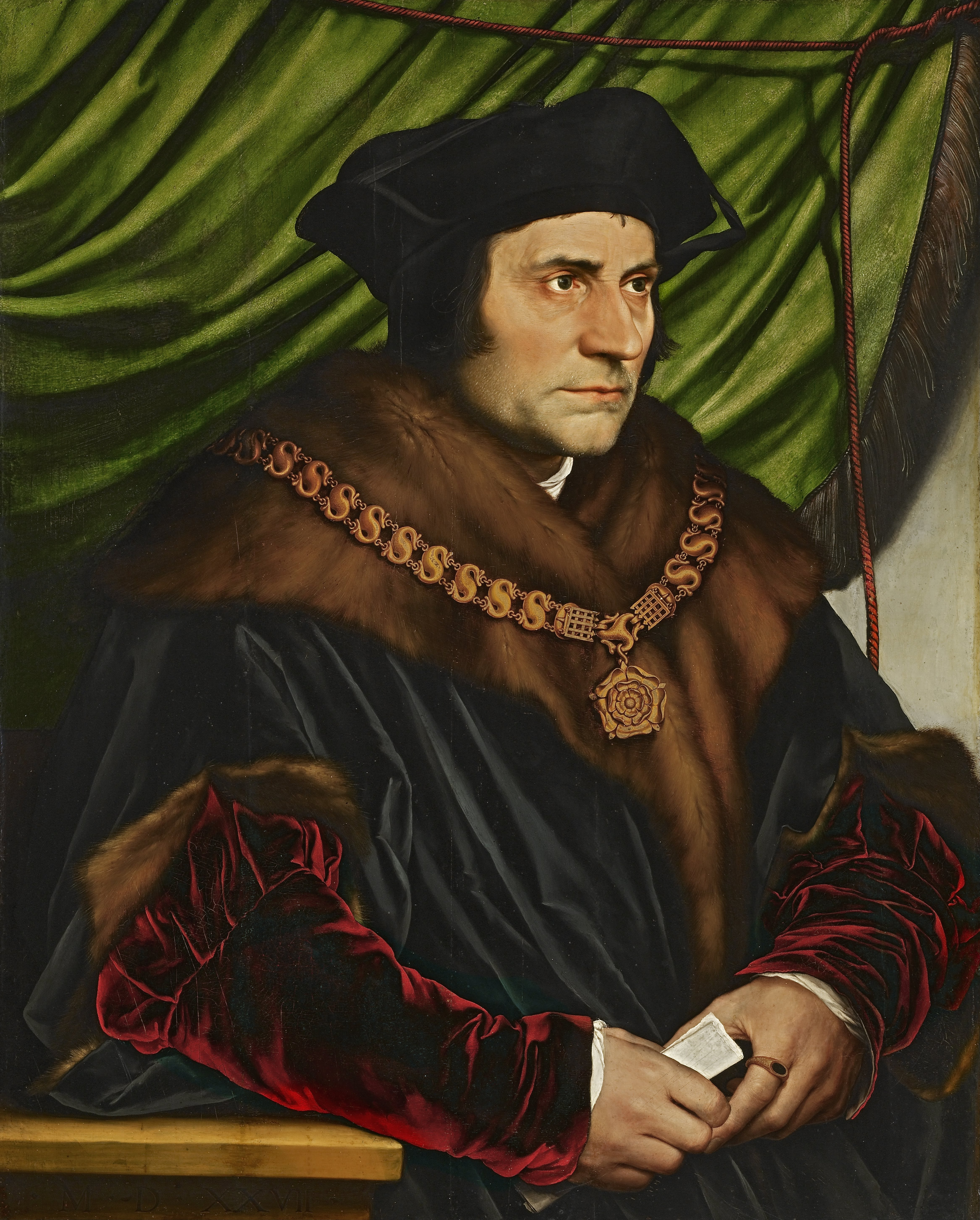
A Man for All Seasons and a Trucking Convoy

I enjoyed the 1966 Academy Award winning A Man for All Seasons so much I read the play by Robert Bolt on which it is based. This dialogue between Sir Thomas More, his wife Alice, daughter Margaret, and future son-in-law William Roper comes to mind when I encounter "Friends" on Facebook who seem to want to overthrow our democratically-elected government: 

MARGARET: Father, that man's bad.

MORE: There is no law against that.

ROPER: There is! God's law!

MORE: Then God can arrest him.

...

ALICE: While you talk, he's gone! 

MORE: And go he should, if he was the Devil himself, until he broke the law!

ROPER: So now you'd give the Devil benefit of law!

MORE: Yes. What would you do? Cut a great road through the law to get after the Devil?

ROPER: I'd cut down every law in England to do that!

MORE: Oh? And when the last law was down, and the Devil turned round on you—where would you hide, Roper, the laws all being flat? This country's planted thick with laws from coast to coast—man's laws, not God's—and if you cut them down—and you're just the man to do it—d'you really think you could stand upright in the winds that would blow then? Yes, I'd give the Devil benefit of law, for my own safety's sake.*

YouTube to the rescue, here's the Paul Scofield version:


Sir Thomas More—at least the character in Bolt's play if not also the historical figure—is my political hero. If you haven't seen the film, do yourself a favour and watch it. 


* More's speech in the play may draw on this passage from William Roper's 1556 biography of More:

"Howbeit this one thing, son, I assure thee on my faith, that if the parties will at my hands call for justice, then all-were-it my father stood on the one side, and the devil on the other, his cause being good, the devil should have right." (HT: Robert Bork)

Friday, August 31, 2018

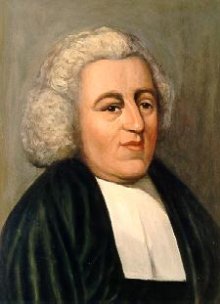
I used to write letters: John Newton, William Cowper, and 18th-Century Blogging

A recent visit to the Cowper and Newton Museum in the town of Olney has me thinking about the 18th-century equivalent of blogging, and the impoverishment of new technologies.

Olney was on our list of out-of-the-way places to see, partly because we went on a John Newton kick a few years ago and read through Newton's 1793 Letters to a Wife by the Author of Cardiphonia, and then his more well-known 1764 volume, An Authentic Narrative of some Remarkable and Interesting Particulars in the Life of John Newton Communicated in a Series of Letters to the Reverend Mr. Haweis, Rector of Aldwinckle, Northamptonshire, and by him (at the Request of Friends) Now Made Public.

To these letter collections published during Newton's lifetime, we can add another one and a half volumes in Newton's collected works, as well as a few others compilations that did not make it into the collected works.

Portrait of Cowper by William Blake in the Museum
William Cowper I knew only as a poet and hymn-writer who struggled with depression, so it was a bit surprising to find that the Cowper and Newton Museum is mostly about Cowper, with only one room devoted to Newton--perhaps for tourists like us who come to Olney because of Newton. The emphasis on Cowper is no doubt partly because the museum is located in the house where Cowper lived for almost twenty years (1768-1786), but during the 18th and 19th centuries, it was Cowper who was the celebrity author and letter writer.


The museum is filled with Cowper memorabilia--his sofa, his chair, his personal wash-stand, his handkerchiefs, and replicas of his rabbits. This approach feels a bit dated now, more than a century after the museum opened, but it works well because Cowper was famous for writing about everyday life, and the personal artifacts are frequently matched with Cowper's own descriptions found in his poems and letters.

In the back of the garden behind the museum is Cowper's writing nook, which he described in letters as follows:

"I write in a nook that I call my Bouderie; it is a Summer House not much bigger than a Sedan chair, the door of which opens into the garden that is now crowded with pinks, roses and honeysuckles, and the window into my neighbour's orchard. ... It is secure from all noise, and a refuge from intrusion."

"As soon as breakfast is over, I retire to my nutshell of a Summer House which is my verse manufactory, and here I abide seldom less than three hours, and not often more. In the afternoon I return to it again, and all the daylight that follows, except what is devoted to a walk, is given to Homer."

The definitive edition of William Cowper's letters is the five-volume Oxford University Press edition of The Letters and Prose Writings of William Cowper.

You could say that Cowper and Newton wrote letters because they couldn't blog. Despite their personal address, letter writers often hoped for a wider audience. At least since Cicero, the publication of letter collections was an established practice, much like books that begin as blogs today. But the shift in technology has also led to a fundamental change in writing (and reading) practices. Now that communication is instant and potentially unlimited in scope, and the epistolary genre is all but obsolete, what have we lost?

Sunday, May 27, 2018

John Evelyn's Reading Recommendations

In 1704 the 17th-century man of letters, John Evelyn, wrote out a short book of advice for his twenty-two year old grandson, Evelyn's only surviving male descendant and heir to his estate. Memoires for my Grand-Son was preserved in the family library at Wotton until 1926 when it was transcribed and published. (Tragically, the library itself "was sold and dispersed" in the 1970's. I imagine it looked something like the library in Hatfield house, pictured on the right.)

The contents of the Memoires range from detailed lists of tools that need to be oiled and cleaned once a year to an inventory of "Mathematical Instruments" kept in the room next to the library. According to the editor,
"The chief value and interest of the manuscript lies ... in the admirable fussiness which impelled [Evelyn] to give such details of how a country gentleman should conduct his life and affairs. Many of these details throw light into obscure corners of the domestic economy of the late seventeenth century" (xi).

As you might expect, I was especially interested in the section on "Books & Studys for the Improvement of your knowledge." Evelyn begins the section by insisting on life-long learning:
"I thought I had say'd all that was necessary to be don as to your care within dores excepting that of the Library Appartments, which require your especial and constant Inspection, nothing more becoming a person whose Education has been something above that of most ordinary Country Gents who commonly unlearne and abolish all they had learn'd at schole, university, &c., when they come to their Estates, thro' a slothfullnesse and unacountable neglect of Cultivating their knowledge and the noblest facultys of their Intellectual Man, that is, by advancing toward something usefull as well as for merely entertainement of time. In order to this a constant and setl'd method should be resolv'd upon with an unvariable assiduity, and so order'd that none of these opportunitys be lost which do not necessarily require attendance or any publique Employment, there being none either of greate or buisy but leave such vaccuitys and Interstices as may aford a studious person time of improving his knowledge, which otherwise be cast away & utterly lost. My L. Chancellor Bacon has beside his owne example confirm'd what I have said, tho' he was a person in continual employment as a Lawyer, Judge, Privy-Conseller, & in perpetual buisinesse. The like were Raileigh, Selden, Hales, Vaughan, &c., besides forainers <in> aboundance ... Philologers, Noblemen, Souldiers, Advocats, Divines, Physitians, States-men, &c., (I name them promiscuously), to whom the knowing-world is oblidged for the Improvements of the present Age beyond a Thousand which are past." (pp. 38-40)

In today's jargon, Evelyn might say those who aspire to be leaders need a solid grounding in the liberal arts.

Next, Evelyn lists the kind of subjects a country gentleman should make the object of his study:
"Among these studys & Facultys most necessary for you, I think, would be more than a superficial Tincture of the Laws, Civile, Municipal; History, both in generall and particular by a judiciously chosen Method, Antient, Modern, Greeke, Roman, and from the decline of those Empires to our owne times, accompanyd with Chronologies, Geography, &c. And for the most usefull diversions assistant to innumerable subjects both speculative, but above all practicall, Mathematicks, which ... sharpens and settles the Judgement. ... But to be accomplisht, above all, Algebra. These well studied will furnish also innumerable other knowledges, accompanyd with such Treatises as every day occurr, relating to modern History and Arts, Travelles, discoverys, Transactions Philosoph:, &c., beside the most select pieces of all kinds which your library will afford you, poetical, political, Military, All the Classics, &c., and other noble entertaiments both pleasant and profitable, whilst your maine study should be such as we have recommended to us by the most grave and wisest Ancestors. ... One would not be notoriously Ignorant of anything belonging humanity, or laudably Entertaining at home in private and abroade or in Company, without ostentation." (41-43)
Evelyn commends the practice of keeping a commonplace book, both as an aid to memory and as  preparation for writing:
"In order to all this and all your other studys either by booke or conversation, A well digested Adversaria as to common places should by no meanes be neglected, in which to write down and note what you find most important & usefull in your Readings & not trust altogether to your owne Memory, so in a little time you will find your papers furnish <you> with materialls of all subjects; short notes and Referrences are sufficient for this unlesse wher you meete with some Remarkable passages which may require a larger transcription. From such a Magazine one is inabled to speake or write upon any occasion, & it would not be amisse to pitch upon some usefull subject to exercise your style in & to publish some Fruits of your studys, which cannot be don without Collections, no man being able to build anything whatever without the help <of> others which may stand or last longer <than> the Cobwebs spun out of the bowels of an Insect. But with this Advice, that, when once one has written what is of such intrinsical value as to gaine universal applause, To adventure out againe without extraordinary caution." (43-45)

Last, but not least, Evelyn states that Sundays and Holy days should be devoted to the study of Theology: 
"If now I have reserved that of Theology to the last place, it is not out of forgetfullnesse or that it ought not to have been the very first of all Recommended, but because all the studys hitherto mention'd are to be subservient to This, which, being of all others the most necessary and sublime, ought never to be omitted, That you may be able to give an Account of your Faith & choise of your Religion upon principles solid & rational, and not because it is your Country's profession onely. For this end, therefore, have your first & chiefe recourse to the Divine Revelation, The Holy Scriptures, handed downe to the world by those Holy and Inspired men, the prophets, Apostles and Successors. ... This to be the Employment of Sundays & Holy-days (as they call them) especially, & of every weekday, morning or Evening, after your privat prayers, in which, however short your leasure may be, consistent with other necessary buisinesse you may by degrees arive to a greate deale of the most Excellent knowledge of that unum necessarium in comparison of which all other is unprofitable. Let your choise (after competent acquaintance with the Scriptures, that sourse & perennial fountaine) be the most genuine and antient of those who immediatly writ after the Apostolic age and so downe to the present; nor let the Volumes of the Fathers, Councils, and Controvertists, afright you, these being so very few after the first foure Centurys (and they no way insuperable) which you have not sufficiently supplyd by many excellent Epitomisers of all that is considerable in them." (45-48)
Evelyn was evidently describing his own practice. Toward the conclusion of the Memoires, Evelyn explains that "Most of the devotional papers, books and sermons, were the tiresome [i.e., tiring] exercise of Sundays & Holydays, which in time swell'd into such bulk." (65)

Friday, April 20, 2018

Martyrdom and Motivation: Robert Falcon Scott, Roald Amundson, and the Cambridge Polar Museum

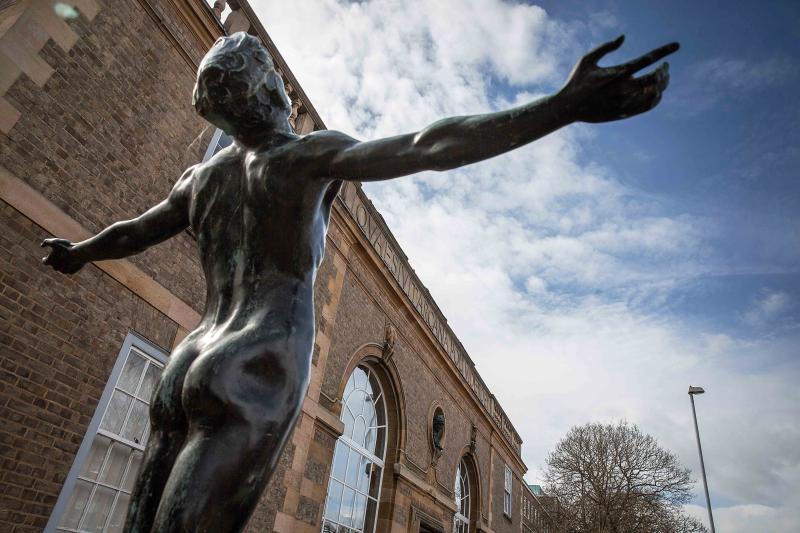
"Youth" by Kathleen Scott
My daughter and I took an Easter break outing to The Polar Museum at the Scott Polar Research Institute last week. The Institute takes its name from Robert Falcon Scott, who arrived at the South Pole on 17 January 1912 only to find that the Norwegian explorer, Roald Amundson, had got there 34 days before him. The bodies of Scott and his companions were found on their return journey just 11 miles from a cache of food and supplies. Scott's diary, discovered at the site, chronicles the ill-fated expedition's harrowing final days, and concludes with the plea "for God’s sake look after our people."

It was a bit odd, I thought, to name a research institute after an explorer who came in second and who did not live to tell the tale. But when the diary was published it caused a sensation. So much money poured in to "look after our people" that some was set aside to found the institute. The story about the heroic explorers was used to drum up support for the first world war. Perhaps it is no coincidence that the Scott Polar Research Institute was built right beside the church of "Our Lady and the English Martyrs" or that a sculpture donated to the institute by Scott's widow, Kathleen, looks rather like a crucifix. 

Scholars debate why Scott failed and Amundson succeeded, but the museum keeps it simple, explaining that Amundson beat Scott to the South Pole because he had only one goal--to be the first one to reach the South Pole--and he pursued it single-mindedly. I'm sure there's a lesson there somewhere...

(In case you are wondering, s. enjoyed sitting by the Cam and feeding swans much more than the museum.)

Sunday, December 10, 2017

Highlights from the British Museum

I made it out to the British Museum with my daughter last weekend, enjoying our first London Tube ride along the way. S., along with a crowd of other people, was excited at the prospect of seeing the archaeological discovery that enabled scholars to decode Egyptian hieroglyphs:
The Rosetta Stone, British Museum,
After visiting Athens in 2013, I wanted to see the Elgin Marbles that used to adorn the Parthenon. (At the beginning of the 19th century, Lord Elgin received permission from the Ottoman government to take away "pieces of stone with old inscriptions or figures thereon." The priceless rock he carted off surely exceeded what the Sultan had in mind.)

The Egyptian exhibits were stunning, as one would expect:
Amenhotep III's left arm

But I was most surprised and astounded by the Assyrian artifacts. Here, for instance, is a Lamassu from Khorsabad that apparently goes back to the reign of Sargon II in the late 8th century BCE:

More exciting still is a series of wall panels depicting Sennacherib's siege of Lachish in 701 BCE:
Sennacherib's capture of Lachish is mentioned in Isaiah 36:1-2; it is also described first-hand in a series of letters inscribed on ostraca that were discovered when Lachish was excavated in the 1930's.

On a final dash through the second floor, I snapped pictures of various 1st-century Roman emperors for use in class:
The Emperor Augustus

If it were not for the incentive of seeing real mummies...

... we would have missed the Cyrus Cylinder, which describes Cyrus's policy of repatriating subject peoples to their homelands:


Admission is free, so it is churlish to complain that the museum is simply too large to take in on a single visit. The contents could easily be divided into a half-dozen world-class museums. 
I guess that means I'll need to go back.

Thursday, May 25, 2017

The Book of Common Prayer and Bible Literacy

I recently stumbled across a 450-year-old "Through the Bible in a Year" reading plan in the 1662 edition of the Book of Common Prayer: 
"The Psalter shall be read through once every Month, as it is there appointed, both for Morning and Evening Prayer. ... The Old Testament is appointed for the first Lessons at Morning and Evening Prayer, so as the most part thereof will be read every year once, as in the Kalendar is appointed. The New Testament is appointed for the second Lessons at Morning and Evening Prayer, and shall be read over orderly every year thrice, besides the Epistles and Gospels; except the Apocalyps, out of which there are only certain proper Lessons appointed upon divers Feasts."  (pp. 23-24)

The list of daily lectionary readings in the 1662 Book of Common Prayer was taken over more-or-less unchanged from the first 1549 edition. The plan omits the book of Revelation, the subject of controversy in post-Reformation England, and parts of the Old Testament, but makes up for it by reading through the Psalter once every 30-day month and the rest of the New Testament three times in the year. The result is a schedule that is more rigorous than most contemporary Bible reading plans, and, I suspect, significantly more than is expected of churchgoers in most evangelical churches today.

How widely this plan was adopted is another question. For most people in 17th-century England, church consisted of the morning and evening prayer services--Matins and Evensong--but only on Sundays. Most people would not have owned a copy of the prayer book, and most churches did not offer daily services. John Spur notes that "the rector of Clayworth in Nottinghamshire thought himself conspicuously pious when he resolved to read prayers on Wednesdays and Fridays during Lent."*

Nevertheless, the plan had an impact. To take one famous example, the community established by Nicholas Ferrar at Little Gidding "read the regular daily offices of the Book of Common Prayer, including the recital every day of the complete Psalter."** According to Hannibal Hamlin's fine Oxford Handbook article on "Reading the Bible in Tudor England," "apparently many did follow the Prayer Book's 'order howe the Psalter is appointed to be read'" each month. If the BCP's annual reading plan for the whole Bible did not catch on as widely, that may have been because there were other more popular alternatives: "Daily reading of the rest of the Bible was a common practice, but readers could either decide on their own reading plan or follow one of the many available in print."***

Indeed, the BCP's daily lectionary is in many respects characteristic of the dedication to lay Bible reading that both contributed to and resulted from the Protestant Reformation. As a result, as Hamlin puts it, "the Bible permeated almost every nook and cranny of sixteenth-century culture."***

Perhaps there is something to be learned here by Protestant churches today who lay claim to the heritage of the Reformation. Why not take a lead from a 16th-century church willing to instruct its members to read through the Bible every year? I submit that the practice of Bible reading says more about the authority of Scripture than any doctrinal statement.

Monday, August 17, 2015

History 312: Ideas and Society in Early Modern Europe

Erasmus and Thomas More Visit the Children of King Henry VII at Greenwich, 1499 by F.C. Cowper; source
If you are looking to fill a history elective at Briercrest College this fall, may I recommend HIS312: Ideas and Society in Early Modern Europe? Like the history course I recommended last year--which turned out very well, by the way--I can't help but be a tiny bit biased, but I have read the syllabus and talked a lot with the professor about things Early Modern over the past several months, and I think it will be a great course. Curent Briercrest students can check out the syllabus on Briercrest Live; everyone else can find it here (scroll down to the bottom of the page).

For bonus marks, identify Erasmus and Thomas More in the painting, and explain the significance of the colours.