
Wednesday, January 17, 2024
Josephus and Jewish Ethnonyms Take 2
A public service announcement for anyone in the Caronport area:
 This will be a partially-revised version of the paper I gave last year at the Canadian Society of Biblical Studies.


Tuesday, January 2, 2024
A 2023 Reading Retrospective

Zotero tells me I read fewer books in 2023 than I did in 2022, but, for the record, there are a few big books on this year's list and more that are related to my academic and teaching interests. I count eight audiobooks, six novels (if you include Adrian Plass), three or four Greek readers and texts, a couple language-learning pedagogy-related books, ten or so books related to biblical studies and ancient Judaism, and, depending on how you slice them, 3-5 memoirs or autobiographies.
Zotero also tells me how little reading, aside from student assignments and course textbooks, gets done when classes are in session. Grades submitted, I completed seven books in the delightful final week of 2023 to make up for the drought.
Without further ado, here is the list in reading sequence, with more annotations than usual:

Plass, Adrian. The Theatrical Tapes of Leonard Thynn. London: Marshall Pickering, 1989. [Re-read]
Plato. Apology.
[Always a win when I make it through one of Plato's dialogues in Greek]
Doerr, Anthony. All the Light We Cannot See. New York: Scribner, 2017.
[Mesmerizing novel that felt a little shallow in retrospect]
Wilcock, Penelope. The Hawk and the Dove. Eastbourne: Minstrel, 1990.
Thiessen, Matthew. Jesus and the Forces of Death. Grand Rapids: Baker Academic, 2020.
[My initial reaction: Really fine book. I’m not quite convinced about Thiessen's central thesis about Jesus, but it shows compellingly that Jesus was Torah-observant (according to the Gospels) and includes all sorts of helpful details about how the purity system was understood.]
Staples, Jason A. The Idea of Israel in Second Temple Judaism: A New Theory of People, Exile, and Israelite Identity. Cambridge: Cambridge University Press, 2021.
[My initial comments here]
Rogers, Guy MacLean. For the Freedom of Zion: The Great Revolt of Jews against Romans, 66–74 CE. New Haven: Yale University Press, 2022.
[Audiobook for the main text, otherwise I would never have finished, print book for the footnotes; among other things, this massive book is a helpful counter to Mason's more minimalistic approach to Josephus]
Moberly, R. W. L. The Bible in a Disenchanted Age: The Enduring Possibility of Christian Faith. Grand Rapids: Baker Academic, 2018.
Wyner, Gabriel. Fluent Forever: How to Learn Any Language Fast and Never Forget It. New York: Harmony, 2014.
[Audiobook, but I liked it enough to order the print version. Big idea: Use Anki.]
Eliot, George. Silas Marner. Edinburgh: William Blackwood & Sons, 1861. [Audiobook]
Collier, Winn. A Burning in My Bones: The Authorized Biography of Eugene H. Peterson, Translator of The Message. Colorado Springs, Colorado: WaterBrook, 2022.
[Audiobook; two thumbs up]
Balme, Maurice, Gilbert Lawall, Luigi Miraglia, and Tommaso Francesco Bórri. Athenaze: introduzione al greco antico. Parte II. 2nd ed. Montella, Avellino: Accademia Vivarium Novum, 2008.
[Re-read for the 2nd time. Also re-read a couple times this year: Athenaze vol. 1]
Kushner, Aviya. The Grammar of God: A Journey into the Words and Worlds of the Bible. New York: Spiegel & Grau, 2015.
[Audiobook, but I liked it enough to order a paper copy]
Newbigin, Lesslie. Proper Confidence: Faith, Doubt, and Certainty in Christian Discipleship. Grand Rapids: Eerdmans, 1995.
Henshaw, Florencia G., and Maris D. Hawkins. Common Ground: Second Language Acquisition Theory Goes to the Classroom. Focus, 2022.
Linebaugh, Jonathan A. The Word of the Cross: Reading Paul. Grand Rapids: Eerdmans, 2022.
[Really helpful for thinking about Romans]
Barclay, John M. G. Paul and the Power of Grace. Grand Rapids: Eerdmans, 2020.
[A textbook; re-read, this time as an audiobook]
Gaventa, Beverly Roberts. When in Romans: An Invitation to Linger with the Gospel According to Paul. Grand Rapids: Baker Academic, 2016.
[Textbook; re-read multiple times]
Brontë, Charlotte. Jane Eyre. Oxford World’s Classics. Oxford: Oxford University Press, 1847.
[Re-read for the first time in 24 or 25 years]
Lee, Harper. To Kill a Mockingbird. J. B. Lippincott & Co., 1960.
[First read in high school 30+ years ago; takes the prize for best fiction]
Westerholm, Stephen. Romans: Text, Readers, and the History of Interpretation. Grand Rapids: Eerdmans, 2022.
[Chapter two is a must-read response to the "Paul within Judaism" school; the rest of the book is a slow burn: I confess to wondering why much of the early history of interpretation mattered--the ancients' concerns seemed so foreign to the text--but then it all clicked in the final few chapters.]
Simkovich, Malka Z. Discovering Second Temple Literature: The Scriptures and Stories That Shaped Early Judaism. Philadelphia: The Jewish Publication Society, 2018.
Bono. Surrender: 40 Songs, One Story. Random House Audio, 2022.
[Fabulous audiobook if you like U2; I listened to most of the book on 1x speed for the music and for Bono's narration.]
Joint Association of Classical Teachers. Reading Greek: Text and Vocabulary. 2d ed. Cambridge: Cambridge University Press, 2007.
[Most satisfying book to have completed: I purchased the first edition of this graded Classical Greek reader in the late 90's, but despite repeated attempts I never made it past the first few chapters. After working hard on classical Greek fluency over the last 5 years, most of the text is now accessible.]
Thiessen, Matthew. A Jewish Paul: The Messiah’s Herald to the Gentiles. Baker Academic, 2023.
[Good title, great footnotes; pairs well with Westerholm's chapter two above.]
Collingwood, R. G. An Autobiography. Oxford: Clarendon, 1939.
[First read in 2007; more accessible than The Idea of History]
Moore, Russell D. Losing Our Religion: An Altar Call for Evangelical America. Sentinel, 2023.\
[Audiobook; Moore calls out the hypocrisy and moral bankruptcy of Trump-supporting American Evangelicals, and proposes alternatives. Big idea: James Dobson was right: character matters. Perhaps because we are the same (!) age, I share Moore's sense of betrayal.]

Saturday, December 16, 2023
ALS and Hope of Glory
When Paul pauses to catch his breath at the beginning of Romans 5, he exclaims, “we boast in the hope of the glory of God,” and then quickly adds, “What’s more, we also boast in our sufferings.” As a follower of the crucified Messiah, Paul can’t bring himself to boast directly in the hope of glory, so he backs up and starts over, tracing a sequence that leads from suffering to hope:
Suffering produces endurance,
endurance produces character,
and character produces hope.
Suffering does not always produce hope, of course; it often ends in despair. But, Paul says, for us it leads to hope. These are assertions, not arguments, no doubt based on Paul’s own experience: Those who cry “Abba Father,” co-heirs with the crucified Messiah, find that suffering leads to hope, not despair, that all creation’s groaning goes hand-in-hand, somehow, with the love of God poured into our hearts.
It is a remarkable thing when you see this truth confirmed before your eyes.

As the terrible disease took its terrible toll - the rapid loss of mobility, the loss of speech, the loss of the ability to eat - my sister lived life and faced death with courage and steadfast trust in the goodness and love of God.
A few months after her diagnosis Karen began chronicling her experience and expressing her faith on a blog she called “Sufficient Grace.”
The entry for April 11 is a typical example that sandwiches the unvarnished reality of her suffering between a Bible verse and a confession of faith:
“For his anger endureth but a moment; in his favour is life: weeping may endure for a night, but joy cometh in the morning. (Psalm 30:5)
“Grief is the companion of ALS. It rises with every loss, sometimes with great tears and sobs, sometimes with just a lingering sadness and a sense that what used to be is no more. … Joy cometh in the morning! While I am still here, there are plenty of reasons to get up in the morning–sunrises, singing birds, laughter as my husband or daughter gets me dressed, the warm smile of each of my family members, a cup of sweet hot tea, and friends. And there are many more things I could list. God’s blessings are indeed rich and infinite!”
May 6: “The Rock that is Higher than I” (from Psalm 61:2)
“It’s been a grieving week. As my hands weaken and I can hardly carry my phone, let alone lift anything else, and my legs weaken, and I struggle with the stairs, and my voice weakens, and I struggle to speak, it is so easy to get discouraged. I have become nearly completely dependent on my family. The tears of sadness and frustration have been very near the surface. But there have been good things too. With every loss, there are blessings and mercy….”
“ALS is a thief. It takes and takes, and takes some more. But it can’t take my faith, and it can’t take the promises of God.”
“I think I have more questions than answers about why God allows such difficult situations to happen to us. All I know is that He is not done writing my story just like I am not done writing my own story.”
“One of the recent losses has been that of intelligible speech. … The hardest loss has been the loss of the ability to swallow food. I really miss my morning tea and the ability to take on active part in meals with family. In my family food has been a way of showing love. We cook favorite meals because we love. This subject has taken me a while to write about because the loss has been so painful. Yes you can blend foods and push them through a tube but it isn’t the same. As these losses grow bigger the thought of heaven grows sweeter and I am reminded of Paul when he says, in Philippians 3 ... ‘I count all things but loss for the excellency of the knowledge of Christ Jesus my Lord....’”
“I am faint and weary, weary of this body that no longer works. But I look forward with hope to the One who never is faint or weak or weary. And I look forward to one day having a new body that has strength to be able to walk and talk.”
Karen’s last post, a reflection on Jesus as the bread of life - “he that cometh to me shall never hunger” - was published on Oct 21.
The blog’s final post is her obituary. You can read it here.
Wednesday, September 27, 2023
Whose praise is from God? Matthew Thiessen and Kevin Grasso on Romans 2:28-29

Technical post alert: I am using this space to work out and invite feedback on my response to Kevin Grasso’s response to Matthew Thiessen’s interpretation of Romans 2:28-29. Due to time constraints, I am going to drop right into an ongoing and fairly technical discussion of the syntax of Romans 2:28-29, which reads as follows:
28 οὐ γὰρ ὁ ἐν τῷ φανερῷ Ἰουδαῖός ἐστιν οὐδὲ ἡ ἐν τῷ φανερῷ ἐν σαρκὶ περιτομή, 29 ἀλλ’ ὁ ἐν τῷ κρυπτῷ Ἰουδαῖος, καὶ περιτομὴ καρδίας ἐν πνεύματι οὐ γράμματι, οὗ ὁ ἔπαινος οὐκ ἐξ ἀνθρώπων ἀλλ’ ἐκ τοῦ θεοῦ.
Most English translations render Romans 2:28-29 much like the NRSVue does:
For a person is not a Jew who is one outwardly, nor is circumcision something external and physical. Rather, a person is a Jew who is one inwardly, and circumcision is a matter of the heart, by the Spirit, not the written code. Such a person receives praise not from humans but from God.
Those who translate the passage this way often conclude that Paul here redefines the term “Jew” as a reference to believers in Jesus regardless of their ethnicity.
In the fall of 2017, I was persuaded by Matthew Thiessen’s defense of a translation proposed earlier by Hans Arneson:
For it is not the outward Jew, nor the outward circumcision in the flesh, but the hidden Jew, and the circumcision of the heart in spirit and not in letter, whose praise [is] not from humans but from God.
I am not convinced by Thiessen’s larger argument that Rom 2:17-29 refers to a Gentile who calls himself a Jew, but Arneson’s translation seemed to offer a straightforward reading of a puzzling text, and to cohere well with a view that I find persuasive on other grounds: In this passage, Paul is not redefining who is and who is not a “Jew”; he is stating which Jews receive praise from God.
I offered a variation on the Thiessen - Arneson translation when I taught Romans in the fall of 2017, 2019, and 2021, and I would have been happy to continue doing so if Kevin Grasso had not argued on linguistic grounds that the Thiessen - Arneson translation is untenable. Here is my summary of Grasso’s argument:
(1) The negative particle οὐ at the beginning of verse 28 must negate what immediately follows. If the verb were negated, as required by Arneson's translation, the negative particle should come immediately before the verb ἐστιν rather than before ὁ ἐν τῷ φανερῷ Ἰουδαῖός. (2) The verb ἐστιν in verse 28 requires a predicate not just the dummy subject “it is,” and the relative clause that Arneson assigns to the verb as its predicate (a) is too far away at the very end of verse 29, (b) never appears as a predicate when it is used as a relative pronoun in the Greek New Testament and, (c) outside the NT, the relative pronoun οὗ always occurs before the verb when it is used as a predicate. (3) The linguistic principle of contrastive focus leads us to expect a positive statement in 29a corresponding to the negation in v. 28.
(You can watch Grasso’s own explanation on YouTube or read it in this Biblingo blog post.)
As a result, Grasso concludes, we have to take verses 28 and 29 as two contrasting statements about who, according to Paul, is a “Jew.” Grasso offers this translation:
“For it is not the outward one who is a Jew, nor is it the outward one in the flesh that is circumcision, but the one in secret is a Jew, and circumcision is circumcision of the heart by the spirit, not the letter, whose praise is not from humans, but from God.”
I find Grasso’s argument mostly compelling ... with one major exception. According to Grasso, the relative clause, “whose praise is not from humans, but from God” (οὗ ὁ ἔπαινος οὐκ ἐξ ἀνθρώπων ἀλλʼ ἐκ τοῦ θεοῦ), “is best taken as ... describing the internal Jew”:
The assertion of the clause is not ‘It is the internal Jew whose praise is from God.’ Rather, the assertion is ‘The internal one (or Jew), whose praise is from God, is a Jew.'
My question has to do with the word order of the Greek text. Grasso concludes that the relative clause should go with “the internal one” and not with “Jew,” but he does not explain why the antecedent of the relative pronoun, οὗ, is ὁ ἐν τῷ κρυπτῷ (“the internal one” or “the one in secret”) and not Ἰουδαῖος (“Jew”).
I suggest that the antecedent is more likely to be Ἰουδαῖος (“Jew”), the word that follows ὁ ἐν τῷ κρυπτῷ, and which Grasso — correctly, I think — takes as the predicate of the verbless clause, ὁ ἐν τῷ κρυπτῷ Ἰουδαῖος (“the one in secret is a Jew”).
This way, we have a parallel structure in vv. 28 and 29, with Ἰουδαῖος standing in predicate position in both verses:
28 οὐ γὰρ ὁ ἐν τῷ φανερῷ Ἰουδαῖός ἐστιν / For not the one in the open is a Jew ...
29 ἀλλ’ ὁ ἐν τῷ κρυπτῷ Ἰουδαῖος, / but the one in secret [is a] Jew.
(Scholars who argue that Ἰουδαῖος is the subject in v. 28 and the predicate in v. 29 are influenced by the requirements of modern German and English translation more than by Greek syntax.)
Since the relative pronoun is more likely to refer back to its nearest antecedent, the final relative clause “whose praise is not from humans, but from God” (οὗ ὁ ἔπαινος οὐκ ἐξ ἀνθρώπων ἀλλʼ ἐκ τοῦ θεοῦ) will qualify what Paul means by “Jew”: Paul is not speaking of Jews in general but of those who receive praise from God.
The repetition of “Jew” as the predicate in both verses suggests that it qualifies the assertions in both: The only Jews who will receive praise from God, according to Paul, are those who, as verse 29 explains in the clause I have skipped, are circumcised in the heart not merely in the flesh. (I take the contrast between the spirit and letter in v. 29 as a rhetorical rather than an absolute opposition. Paul is not denying that one physically circumcised can be circumcised in the heart.)
In then end, then, Thiessen is still correct to claim that “The central focus of Rom 2:28-29 is the praise of God, not true Jewishness or true circumcision” (2014: 377). With John Barclay, I take it that Paul is not redefining Jewishness as a category that now includes Gentile Christians rather than ethnic Jews. Paul’s point instead is that Jews who receive praise from God are those who have been circumcised in the heart not merely in the flesh.
Further Reading:
Barclay, John M. G. Paul and the Gift. Grand Rapids: Eerdmans, 2015. (See pp. 469-471.)
Thiessen, Matthew. “Paul’s Argument against Gentile Circumcision in Romans 2:17-29.” NovT 56 (2014): 373–91.
Thiessen, Matthew. Paul and the Gentile Problem. New York: Oxford University Press, 2016.
Saturday, September 16, 2023
Ancient Greek Picture Flashcards in Anki
I completed a set of 500 ancient Greek picture flashcards just in time for the beginning of Briercrest's third intensive Greek semester. The cards are designed to help create a direct link between Greek words and their meaning. On one side of each card is an image:

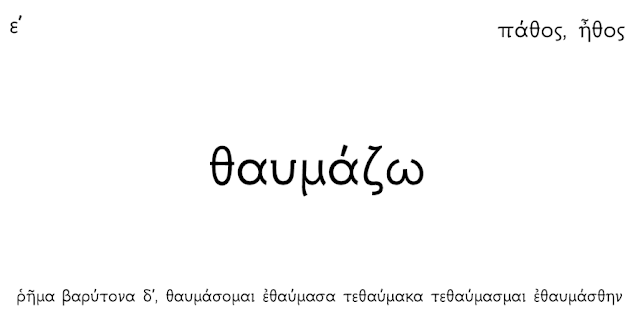
The top line notes the chapter in which the word appears in our course textbook and identifies the word's semantic domain category (τάξις), in this case πάθος, ἦθος. The bottom line provides details about the word's grammatical form, beginning with its part of speech (μέρος λόγου), in this case ῥῆμα. Verbs are classified into their ancient Greek verbal pattern (συζυγία), e.g., βαρύτονα δ'. Principal parts are also included for about 100 verbs.
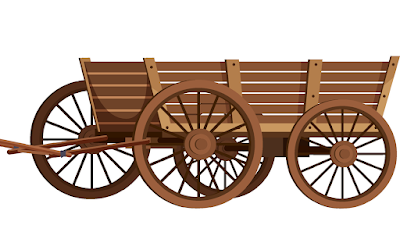 On the back of the card, the bottom line informs you that the word is a feminine noun in the first declension declined with η, and that the genitive singular form is ἁμάξης:

 Printing, cutting, and sorting multiple sets of 500 cards is a bit of a massive undertaking (even with the whole family involved), so I was relieved to find that — thanks to my work with Hebrew picture flashcards earlier this summer — the process of importing the Excel file and images into a digital version of the flashcards went smoothly:


On the other side is the lexical form of the Greek word along with additional information about the word:
The top line notes the chapter in which the word appears in our course textbook and identifies the word's semantic domain category (τάξις), in this case πάθος, ἦθος. The bottom line provides details about the word's grammatical form, beginning with its part of speech (μέρος λόγου), in this case ῥῆμα. Verbs are classified into their ancient Greek verbal pattern (συζυγία), e.g., βαρύτονα δ'. Principal parts are also included for about 100 verbs.
The format for nouns is similar. Here, for instance, is an ἄμαξα:

There is no English on the cards because our goal is reading fluency in Greek. Bypassing English wherever possible and avoiding the habit of mentally translating as one reads speeds up the reading (and language learning) process.
The 500 words include classroom vocabulary, common semantic domains such as animals, fruits and vegetables — θρίδαξ anyone? — as well as words that appear in the Italian version of Ἀθήναζε, our main textbook.
My colleague, Wes Olmstead, is responsible for coming up with authentic ancient Greek ways of categorizing Greek grammatical forms, for carefully tagging the grammatical information that appears on the back of the cards, and for compiling an initial list of words for our students to learn.
My job was to find useable images that suit the words, to set up the mail merge process, and to produce the finished product:
 Printing, cutting, and sorting multiple sets of 500 cards is a bit of a massive undertaking (even with the whole family involved), so I was relieved to find that — thanks to my work with Hebrew picture flashcards earlier this summer — the process of importing the Excel file and images into a digital version of the flashcards went smoothly:
Anki's spaced-repetition flashcard app has several advantages to printed cards, not least of which is the ability to make them freely available online.
- The full set of cards is too large for Anki's free hosting service, but I have uploaded a sample, which should appear presently. Try searching for "Ancient Greek Picture Flashcards."
- The full decks, Briercrest Ἀθήναζε and Briercrest Ἀθήναζε Reversed, are hosted on my Google Drive account. You can download them here.
- See this post for more information about Anki, and basic instructions about installing and using the decks: https://gervatoshav.blogspot.com/2023/06/using-anki-to-review-biblical-hebrew.html
Production notes:
- Most of the images are from Vecteezy (with a Pro license).
- The font on the cards is GFS Neohellenic.
Comments and feedback are welcome.
Thursday, June 29, 2023
Using Anki to Review Biblical Hebrew and Ancient Greek Picture Flashcards
Anki is one of the most well-known and possibly the best available spaced repetition flashcard apps. It is free, it is powerful ... and it can be complicated to use. What follows is a brief set of instructions to help you get up and running with the app, and with a deck of Biblical Hebrew or Ancient Greek picture flashcards:
(1) Download, install, and load the computer version of Anki at https://apps.ankiweb.net/:

(2) Download the Biblical Hebrew Picture Flashcards or the Ancient Greek Picture Flashcard shared decks:
(a) Biblical Hebrew Picture Flashcards: For the Biblical Hebrew Picture Flashcards, click on "Get Shared" at the bottom of the main Anki screen:

This will take you to Ankiweb (https://ankiweb.net/), the free web-based version of the app, and Anki's repository of free shared decks. The first time you use Ankiweb you will need to create an account by clicking "signup" in the top right corner:


Search for "Biblical Hebrew Picture Flashcards" (or anything else you like). Scroll down to the bottom of the screen, and download the Flashcard deck(s):

(b) Ancient Greek Picture Flashcards: The Ancient Greek Picture Flashcard decks are too large for Anki's free hosting service, so you will need to download the files directly from my Google Drive account. You can do that here: https://tinyurl.com/yc2db6z6.
(3) Back in the Anki computer program, click on "Import File" at the bottom right of the screen:
Navigate to your "download" folder and select the appropriate Anki deck file.
(4) Optional: Review Flashcards on the go with Ankidroid or Ankimobile
If you have not already done so in step 3, go to Ankiweb (https://ankiweb.net/), the free web-based version of the app, and create an account by clicking "signup" in the top right corner.
Now you can Sync your decks to Ankiweb, and then, if you like, install and review flashcards on-the-go with the free Android Ankidroid app or the not free iOS Ankimobile app. (Note: There are many knock-off apps that use the Anki name. My advice is to stick with Ankidroid or Ankimobile.)
(5) Begin to take advantage of Anki's spaced-repetition system: By default Anki selects 20 cards from each deck to learn or review each day. The system is designed to bring up cards that you have trouble with for review more often than cards you know well. For more information, see the manual or this handy tutorial. The system works automatically. All you need to do is click on the deck and then click on "Study Now":

(6) Learn to Cram: Unfortunately, Anki tries to force everyone into the same review system. I don't question the effectiveness of the spaced-repetition formula, but sometimes — for example, when you are studying for a quiz on words in chapter 4 or all Piel verbs in chapters 8-10 or all Greek verbs for days 5-7 — you need to cram. The next two videos demonstrate two ways of selecting specific chapters or tagged cards for review. (The videos use the Hebrew decks, but the same steps apply to Greek):
Video 1: Using Custom Study to review a single chapter or category:
Video 2: Using Custom Study and Browse to review multiple categories:
For more information on creating custom filtered decks, see the Anki Manual or this Anking YouTube video. For more on Anki deck organization, take a look at this Traverse.link post. I also found this Reddit post on Anki search syntax to be helpful.
Saturday, June 24, 2023
Biblical Hebrew Picture Flashcards in Anki
Update: See links to the corrected Flashcard files below.
Last summer I made a set of 270 Biblical Hebrew picture flashcards for our introductory Hebrew students:

The images help create a direct link between Hebrew words and their meaning. There is no English on the cards because our goal is reading fluency in Hebrew. Bypassing English wherever possible — and avoiding the habit of mentally translating as one reads — speeds up the reading (and language learning) process.

The cards are designed to be accessible to beginners and still useful to more advanced students. Students who have learned the alphabet can practice reading words they have already been introduced to in class, and ignore the smaller print around the borders of the cards. Some cards appear twice, first in the participle / qotel form (the normal Biblical Hebrew way of conveying present time):

After the qatal / perfect form has been introduced in class, the same picture can be reintroduced with the standard dictionary form and more grammatical information in small print:

In the top right corner, we learn that the word is a verb (פֹּעַל) that occurs in the Qal Binyan (קַל) and belongs to a class of weak verbs with an aleph in the first root letter (פ׳א).
The bottom right corner draws on the method Randall Buth uses in his 500 Friends Hebrew word list to indicate succinctly what the verb looks like in a variety of verb patterns. (If you have studied Hebrew, you will see what I mean.)
The bottom left corner classifies the word in one of several semantic domains—in this case, food (מַאֲכָל).
The cards can, of course, be sorted and reviewed in categories (e.g., all words in the piel Binyan or all words in a particular semantic domain).

Noun cards are similar:
 In the top right corner we learn that the word is a feminine (נְקֵבָה) noun (שֵׁם עֶצֶם). The bottom right corner provides singular and plural absolute and construct noun forms.
 The back looks like this:


Among other benefits, the digital version makes it far easier to sort and review specific kinds of cards. The digital version also makes it possible for me to share the cards freely online. You can download them here:
Now that the school year is over, I have had time to complete a digital version of the flashcards for use in Anki's spaced repetition flashcard app. Here is an example:
Among other benefits, the digital version makes it far easier to sort and review specific kinds of cards. The digital version also makes it possible for me to share the cards freely online. You can download them here:
Update: This post now links to a corrected version of the Anki Flashcard files. (Due to an error in my Excel spreadsheet, the tags on the original card decks were misaligned; the image filenames have also been simplified in this version.)
In this follow-up post I provide a brief set of instructions for those who are new to Anki: https://gervatoshav.blogspot.com/2023/06/using-anki-to-review-biblical-hebrew.html
Subscribe to:
Posts (Atom)