Showing posts with label Ethnicity. Show all posts

Saturday, May 16, 2026

Josephus and Jewish Ethnonyms

I am pleased to report that a pre-print version of my long article, “Josephus and Jewish Ethnonyms: Restoration Eschatology or Jewish Antiquity?” has appeared online at the Journal for the Study of Judaism website.

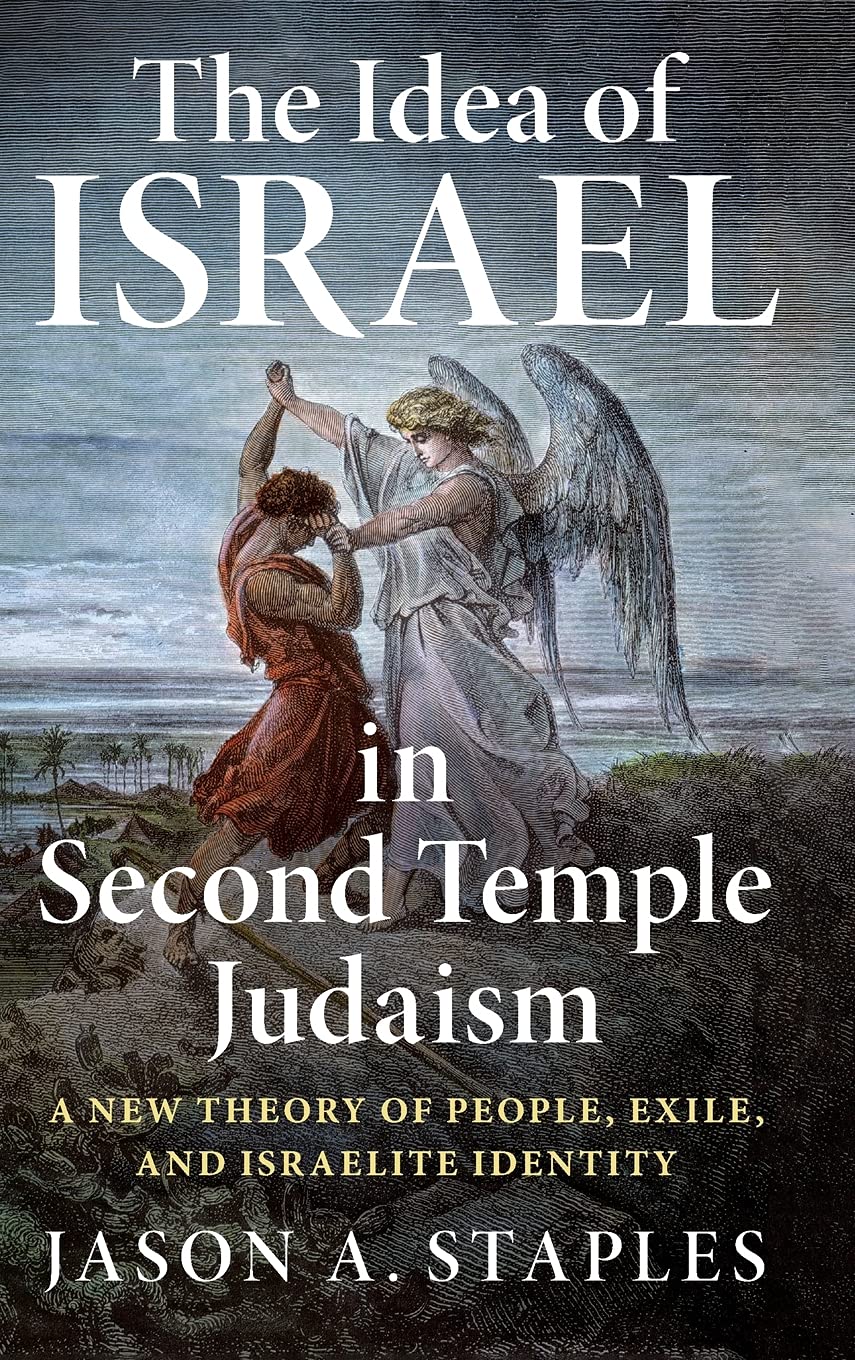
The article is framed as a response to the use Jason Staples makes of the ancient Jewish historian, Josephus, in his book, The Idea of Israel in Second Temple Judaism: A New Theory of People, Exile, and Israelite Identity (Cambridge University Press, 2021). In a nutshell, I agree with Staples that Josephus links the term Ioudaios (usually translated ‘Jew’ or ‘Judean’) to the tribe of Judah, but disagree that Josephus’ adoption of Ioudaios as the standard term for his people at the midpoint of his massive Jewish Antiquities has anything to do with a sense of ongoing exile or a hope for the restoration of the northern tribes of Israel.

In addition to responding to parts of Staples’ important monograph, I’d like to think the article makes its own contribution to our understanding of Josephus, in the first place by defending one of Staples’ main points about Josephus, which might otherwise be neglected; second, by critiquing Staples’ case for restoration eschatology in Josephus; and, finally, by highlighting how Josephus’ introduction of Ioudaios as a new name contributes to his defense of the Ioudaioi by way of a polemical opposition to the Samaritans. (There is also a close reading of sections of Antiquities book 11 and an exploration of Josephus’ ‘geography of exile’—his understanding of the boundaries of Babylon, Media and Persia—and what it implies about where Josephus thought the inhabitants of the northern and southern kingdoms of Israel and Judah were exiled.)

The article has had a long gestation period and has incurred debts along the way. I would like to acknowledge some of them here: I presented an early version of the essay at the Canadian Society of Biblical Studies in May of 2023, and a revised version at a faculty colloquium at my home institution in January 2024. I thank Briercrest for a semester sabbatical in 2025 that gave me time to finish the essay, and the other Dr. Miller for reading and talking about it more than she wanted to. Incisive, detailed and critical feedback from two anonymous reviewers for JSJ resulted in a much better, clearer (and longer) final product. I am also grateful to Staples himself: I learned a great deal from interacting with his work.

For anyone interested in more detail, here are the thesis and outline paragraphs:

The re-examination of Josephus’ ethnic terminology in this article confirms and reinforces one of Staples’ major points. When in Antiquities 11 Ioudaios first begins to be used as a common label, the term is in fact closely associated with the southern kingdom of Judah. I am not persuaded, however, by Staples’ additional claims that Ioudaios consistently refers to a subset of “all Israel” or that the shift from “Hebrews” and “Israelites” to Ioudaioi in Antiquities 11 reflects Josephus’ restoration eschatology. The point of introducing the label, Ioudaios, at the return from exile in Babylon is not to contrast southern kingdom Ioudaioi, on the one hand, and northern kingdom “Israelites” still in exile beyond the Euphrates, on the other. Nor is it to express hope for a still future restoration of the twelve tribes of Israel. When Josephus adopts Ioudaios as his preferred ethnonym and explains its connection to the tribe of Judah, his goal is to establish continuity between contemporary Ioudaioi and the past history of his people in the context of a wider polemical contrast with the Samaritans, whose claim to Israelite ancestry he regards as illegitimate. Once the antiquity of the label and the people it designates is validated, its meaning expands to encompass the whole people regardless of current location or tribal ancestry.

I begin by tracing the use of ethnonyms in Josephus’ paraphrase of the preexilic period (Ant. 1-10), noting that his preferred term for the people as a whole before the exile is “Hebrews,” that Ioudaios seldom appears, and that “Israelites” can designate the people as a whole or the northern tribes, as “Israel” does in his biblical source texts. The two established meanings of “Israelite” complicate attempts to determine whether Josephus presents the Ioudaioi as opposed to the Israelites, a subset of the Israelites, or synonymous with the Israelites. This ambiguity is the subject of sections two and three. Section two examines Josephus’ own explanation of the postexilic origins of Ioudaios and its links to the “tribe of Judah” (Ant. 11.173), and then explores his understanding of the regions where the northern and southern tribes were relocated by the Assyrians and Babylonians. Section three employs what Josephus says about Babylonia, Media and Persia as a diagnostic tool to help determine the meaning of “Israelite” and its relationship to Ioudaios in the first half of Antiquities 11. Although it is not always possible to identify the referent of “Israelite” in book 11, Josephus’ use of “Israelite” and Ioudaios does not point to a separation between Ioudaioi and “all Israel” when the southern tribes return from exile. Instead, the continued use of “Israelite” during the return narrative connects the Ioudaioi to their preexilic past. The next two sections challenge Staples’ claim that Josephus’ adoption of Ioudaios implicitly draws attention to the absence of the northern tribes. Section four argues that Josephus identified the end of exile with possession of the land and temple, not the return of all twelve tribes. References to “Israelites” or members of the “ten tribes” beyond the Euphrates do not, therefore, reflect Josephus’ restoration hope; nor does a sense of ongoing exile explain the shift to Ioudaios. Section five shows that, despite its initial connections to the southern kingdom of Judah, the term Ioudaios expands in scope in Antiquities 12-20, becoming, in effect, a postexilic replacement for “Israelite” and “Hebrew.” A concluding section attributes Josephus’ decision to switch to Ioudaios to his own reading of his biblical source texts, and suggests that he attempted to introduce the name into his narrative in a way that confirmed his people’s antiquity.

You can view the abstract here.

Finally, I tried to present Staples’ position accurately. Staples evidently thinks I failed to do so. So … if you wish to pursue the topic further, I recommend reading Staples’ book as well as my own essay. Let the conversation continue. 


Wednesday, January 17, 2024

Josephus and Jewish Ethnonyms Take 2

A public service announcement for anyone in the Caronport area:

This will be a partially-revised version of the paper I gave last year at the Canadian Society of Biblical Studies.

Tuesday, May 23, 2023

Josephus and Jewish Ethnonyms: Evaluating Jason Staples's Idea of Israel in Second Temple Judaism

I'm on to present a paper at the Canadian Society of Biblical Studies annual meeting at Congress in Toronto next Monday. I put the abstract together in January on a hunch, in the hopes that a deadline would force me to finish a book I wanted to read, and prime the writing pump. Since I didn't make nearly as much progress as I wanted over the semester, it also made a gauntlet of a winter-spring that much more demanding. Right now, however, I'm grateful because at least in a few moments over the last intense week of research and writing, the chance to concentrate on a single intellectual puzzle long enough to make headway has felt strangely like a mental vacation. 

The abstract is not quite what I would say now that I have a more-or-less complete rough draft in hand, but it is close enough to what the paper is still trying to do that I will post it here in case anyone is interested:

In The Idea of Israel in Second Temple Judaism (CUP, 2021), Jason Staples argues that instead of being mutually interchangeable terms for the same group, “Israel” referred to the “tribes of the biblical northern kingdom” or to “the twelve-tribe covenantal people,” while Ioudaios (and cognates) designated a “subset” of this larger group associated with the southern tribes and the biblical kingdom of Judah. This paper will test Staples’s proposal against the evidence in Josephus. I will consider Josephus’s explanation for his own shift in terminology within the narrative context of the Antiquities; reevaluate the dueling claims of Ioudaioi and Samaritans in Antiquities books 9 and 11; and examine the labels Josephus uses to designate both those who returned from exile and those who remained “beyond the Euphrates.” We will see that within Josephus Ioudaios could still serve as a label for the people as a whole, including descendants of the northern tribes.

I may have more to say once the draft is revised and the paper is presented.

Thursday, January 6, 2022

A 2022 Reading List


Scot McKnight used to give himself a new fountain pen every Christmas. This year I did something similar with books.


I read a draft of Adele Reinhartz's Befriending the Beloved Disciple in Jerusalem in December 2000. My former teacher's sequel, Cast out of the Covenant, has been on my to-read list since it came out in 2018. Now that I have a copy of my own, I hope to get to it sooner rather than later. For Adele's reflections on her "Journey with John" and an overview of the book's argument, see this short essay


I first encountered Jason Staples's "new theory of ... Israelite identity"--to quote the sub-title of his 2021 monograph--years ago at SBL, and have kept an eye on his work ever since. When Scot McKnight named The Idea of Israel as the "best academic book" he "read this year," I decided not to wait until the paperback edition comes out.


Christopher Stroup's The Christians Who Became Jews is not the only book whose title and topic make me wish I had written it first. Since my research and publishing efforts have centered on ethnicity in ancient Judaism and, separately, Luke-Acts, I decided to take advantage of a Yale University Press sale and a trip to the United States to pick up a copy of this monograph that treats both at once. 


Also from Yale University Press, Lawrence Wills's recent Introduction to the Apocrypha promises to inform the course I teach on "Jewish Backgrounds to Early Christianity."

To round out my Yale University Press order, I picked up a copy of Brent Nongbri's much-discussed, God's Library: The Archaeology of the Earliest Christian Manuscripts, which is, fortunately, now out in paperback.

Attentive readers of titles (and subtitles) will notice a pattern here: "Jews and Anti-Judaism in the Gospel of John," "Jewish Books in Christian Bibles," "The Christians who Became Jews," "The Idea of Israel in Second Temple Judaism." In different ways all four books deal squarely with my own persistent scholarly preoccupation with early Judaism, the Jewish context of early Christianity, and the relationship between Jews and early Christians. I don't expect to agree fully with any of these books (who does?), but I do expect to learn much and to be stimulated to look at familiar texts with fresh eyes.

I suffer from a tendency to buy books faster than I read them, but these I hope to get to in 2022. Just perhaps--come spring--I may pull one or two of my own languishing projects off the shelf and make some headway on writing as well as reading in pandemic year 3.

In addition to picking up a book order, our trip the United States including a little snowshoeing:


Wednesday, June 29, 2016

Ernst Haenchen on the Purpose of Acts

The introduction to Ernst Haenchen's classic commentary on Acts contains no separate section on the purpose of Acts, but it is clear enough from his discussion that he thinks Acts was written (1) to reassure Christians (a) about the continuation of the Christian story after the death and resurrection of Jesus (i.e., to respond to the delay of the parousia) and (b) about the salvation-historical continuity of Gentile Christianity with the story of Israel (i.e., to demonstrate the legitimacy of the law-free Gentile mission). In addition to reassuring Christians about these two theological issues, Acts was also written to address a political problem. In the face of criticism by Jews, Luke wrote (2) to convince Romans that Gentile Christianity should be tolerated as a religio licita, just as Judaism was:
Luke's narrative suggests "a problem-free, victorious progress on the part of the Christian mission. But in reality Luke the historian is wrestling, from the first page to the last, with the problem of the mission to the Gentiles without the law. His entire presentation is influenced by this. It is a problem with two aspects: a theological and a political. By forsaking observance of the Jewish law Christianity parts company with Judaism; does this not break the continuity of the history of salvation? That is the theological aspect. But in cutting adrift from Judaism Christianity also loses the toleration which the Jewish religion enjoys. Denounced by the Jews as hostile to the state, it becomes the object of suspicion to Rome. That is the political aspect. Acts takes both constantly into account" (100).
Luke's answer to the theological question about salvation-historical continuity also responds to the political problem:
"As a religion of the resurrection, Christianity was in the direct line of succession to Judaism. And one cannot ... expect the Roman State to trouble itself with theological niceties alien to its concern. On the other hand Christianity does not imply any transgression of Roman laws. Consequently the intelligent representatives of Rome always took a benevolent view of the Christian mission" (102).
According to Haenchen, Luke conveys the continuity between Christianity and Judaism (a) by emphasizing that the extension of the Gospel to Gentiles was divinely initiated and (b) by depicting Paul and the apostles--those who first carried the Gospel to Gentiles--as completely law-observant. Haenchen declares that "Luke knows no break in Paul's attitude to the law" (625). Paul's trial narrative, with its stress on Paul's innocence, illustrates this.

But Jewish Christianity was no longer a factor in Luke's Gentile church, and there were no longer any actual positive connections with non-Christian Jews when Luke was writing. In Acts, Jewish Christians (represented by the apostles, the Seven and Paul, etc.) play a symbolic role in witnessing to Jesus and securing the transition to a Gentile Church. This means both that Jewish Christianity has transitioned to Gentile Christianity and that "Christianity was in the direct line of succession to Judaism" (102).

Haenchen seems to suppose that after the destruction of Jerusalem by the Romans, any Jewish Christianity that still existed survived as an inconsequential Christian sect: "Jewish Christians after 70 had become unimportant, and the Gentile Christians were not Paulinists who had to contend with Judaizers for recognition. Luke no longer hoped for the conversion of the Jews" (693).

According to Haenchen, then, Acts depicts Jewish-Christianity as Torah observant, but because Jewish Christianity had, for all intents and purposes, passed from the scene, the church of Luke's day still represents a movement away from Judaism and the law. Although Luke claims continuity with Judaism, the evidence for that continuity lies in the past. Paul, according to Luke, may have been innocent of the charges against him, but the church of Luke's day was not. Luke's Jewish contemporaries were, in fact, right to accuse Christians of opposition to the Torah, Temple and the Jewish people (Acts 21:28). "For Luke the Jews are 'written off'" (128).

This is the third (or fourth) post in a series on the purpose of Acts. The earlier posts in this series, which also link to some of my reflections on the topic from previous years, are here:
Jewish Christianity in Acts: In Search of a Sitz im Leben
Part 1: Reflections on Hermeneutics and the Purpose of Acts
Part 2: The Purpose of Acts: Some Alternatives

Saturday, July 4, 2015

The Maccabean Revolt and Reverse Polemic in Acts, and other summer projects

As usual when I forecast a blog post on a particular topic, nothing materializes (like rain this year in Saskatchewan). My excuse this time is that I needed to write the paper, not about it, and shortly after posting about the Maccabean revolt in Acts back at the beginning of May, I took the paper in a slightly different direction so that the question I meant to ask no longer seemed as pressing. For what it is worth, here is what I concluded when I presented the paper at the Canadian Society of Biblical Studies at the end of May:

Connections in Acts to the initial events leading up to the Maccabean revolt are more extensive than is generally recognized, and these challenge the view that Acts narrates a transition from Judaism to Gentile Christianity. The parallels between Acts and 1-2 Maccabees fall into two contrasting patterns. On the one hand, Jewish opponents of the Gentile mission appeal to the Maccabean revolt to paint the practices of Jewish Christ-believers as a threat to Jewish identity, just as the “renegades” had been during the reign of Antiochus Epiphanes. On the other hand, Luke reverses the polemic and asserts that it is the Jewish leadership in Judaea, as well as other hostile Jews, who resemble Antiochus and the “renegades,” and that Jewish Christ-believers, by contrast, correspond to the faithful Israelites who endured Antiochus’s persecution. Faithfulness, for Luke, now requires faith in Jesus. But the law remains important. Instead of triumphantly moving beyond Judaism and the law, Luke employs “reverse polemic” to try to show that the messianic claims of Jesus and the Gentile mission championed in Acts need not undermine the law or threaten the Jewish identity of Jesus’ Jewish followers.
When I got back from Ottawa, I intended to spend my remaining summer research time revising this and one other paper. I turned to the other paper first...and it promptly fell apart in my hands. I didn't want to leave the pieces scattered all over the floor, but picking them up and puzzling over where I think they now belong has required delving into an area (Greco-Roman political thought) in which I can claim no expertise, and has taken longer than I hoped. But that's how it goes. At times like these, I try to remind myself to breathe, relax, and enjoy the privilege of being able to study and learn new things. They say that quality can't be rushed.

In other news, it did rain today. When I went outside this evening, I found the remains of a robin's nest washed down the downspout on our garage, which just goes to show that even in a drought you shouldn't put your egg basket in a rain gutter.

Thursday, May 7, 2015

The Maccabean Revolt and the Ambiguous Identity of Gentile Christ-Believers in Acts

My major priority right now is finishing a draft of an essay that I am to present at the Canadian Society of Biblical Studies in Ottawa at the end of the month. I am posting a (lightly revised) version of the abstract I submitted in January because I hope to comment more on questions related to the paper in a bit:
In this paper I will argue that Luke draws on the familiar storyline of the Maccabean revolt both to present criticism of Paul and to respond to it. The claim that Paul, like the Hellenizers of the Maccabean era, defiled the temple, and taught against the law and the people (Acts 21:28) treats Paul’s Gentile mission as a threat to Jewish identity. Luke responds by reversing the Maccabean “script”: Instead of collapsing a distinction between Jews and Gentiles, Luke maintains that the charges against Paul confuse Paul’s instructions to Gentiles with his instructions to law-observant Jews, and suggests that it is not Christ-believing Jews, but Paul’s Jewish opponents who violate the law and are thereby responsible for the temple’s demise.
It is not coincidence that my paper deals with some of the same issues I was working through last year (here, here, here, here, and here).

Monday, December 29, 2014

Shaye Cohen on the value of pre-modern Christian exegesis

"Jewish and, to some extent, Christian scholarship has long recognized the continuing value of much of medieval Jewish exegesis for an understanding of the Hebrew Bible, and I do not understand why contemporary scholarship on the New Testament (excluding, of course, textual criticism) ignores practically all works that predate the nineteenth century." - Shaye Cohen, "Was Timothy Jewish?" in Shaye J. D. Cohen, The Beginnings of Jewishness: Boundaries, Varieties, Uncertainties (Berkeley, CA: University of California Press, 1999), 367 n. 9.

For the record, Cohen's answer to the question, "Was Timothy Jewish?" is no. 

Wednesday, July 17, 2013

"Jew", "Judaean", and Christian anti-Semitism

As I was completing the final section of my article (very rough) draft last night, I returned to some remarks I gave at Briercrest's faculty retreat last fall--and I thought they were worth posting here:
________________________________________________________________________________
On the surface, the hot topic in Biblical Studies that I am trying to describe, evaluate and contribute to comes down to the question, Should the Greek word, Ioudaios, be translated ‘Jew’ or ‘Judaean’? This appears to be the kind of hair-splitting about minutiae that typifies scholarship at its “best” (like an academic conference on The Finer Points of Sausage Dogs). But if you are studying ancient ‘Judaism’ the question has a certain urgency to it because you have to call Jesus’ contemporaries something, and you don’t want to embarrass yourself by using a discredited label. The scholars themselves would protest that the debate is much more important than terminology. According to Philip Esler,
 [T]ranslating Ἰουδαῖοι [Ioudaioi] as ‘Jews’ is not only intellectually indefensible . . . but also morally questionable. To honor the memory of these first-century people it is necessary to call them by a name that accords with their own sense of identity. (Esler 2003: 68). 
By contrast, Amy-Jill Levine claims that switching from ‘Jew’ to ‘Judaean’ will do more harm than good:
The Jew is replaced with the Judean, and thus we have a …a text purified of Jews. Complementing this erasure, scholars then proclaim that Jesus is neither Jew nor even Judean, but Galilean. . . . Once Jesus is not a Jew or a Judean, but a Galilean, it is also an easy step to make him an Aryan. So much for the elimination of anti-Semitism by means of changing vocabulary (Levine 2006: 160, 165). 
The reference to anti-Semitism points to a deeper issue. Last week I had my Gospels students brainstorm answers to the questions: Why did Jesus die? What is the significance of his life? What is the connection between the two? When I asked, “humanly speaking, what got Jesus killed?”, the Pharisees kept coming up: They were jealous. They were bad. I was doing my best to smile and nod. Now I wish I had recorded the answers because I can’t remember whether the student who said that Jesus was sent to earth to show how “they” were wrong was speaking about the Pharisees or “the Jews”. But one gets the impression that they amount to the same thing. And who can blame them?

In Matthew 27, Jesus is on trial, accused by Pilate of being the “King of the Jews,” when “all the people” said, “his blood be on us and on our children!” (27.25). In John 8 Jesus is in conversation with the “Jews who believed in him” when he declares “You are from your father the devil” (8.44; cf. 31, 48). In 1 Thessalonians 2, Paul tells the Thessalonian believers:
For you, brothers, became imitators of the churches of God in Christ Jesus that are in Judea. For you suffered the same things from your own countrymen as they did from the Jews, who killed both the Lord Jesus and the prophets, and drove us out, and displease God and oppose all mankind …But wrath has come upon them at last! (1 Thess 2.14-16) 
These passages trouble me not* because I think the New Testament is anti-Semitic, but because of the role they have played in the tragic history of Christian anti-Semitism: Gentle St. Bernard of Clairvaux calling the Jews “a race who had not God for their father, but were of the devil” (source); Martin Luther who—if Wikipedia is to be believed—wrote, “"[w]e are at fault in not slaying them” ; Easter pogroms against the Jews in 19th century Europe, the holocaust, and my memory from junior high school of someone telling a Jewish classmate, “you killed Jesus.”

This is one place where the translation question comes in. According to the NET, Jesus is talking with “Judeans” not “Jews” when he says “your father” is “the devil” (John 8:31). In the NLT, where the truth is “made clear,” the Jews disappear altogether and are replaced with the benign “people.” The NLT and NET are following the advice of the standard lexicon of New Testament Greek, which says:
Incalculable harm has been caused by simply glossing Ἰουδαῖος with ‘Jew’, for many readers or auditors of Bible translations do not practice the historical judgment necessary to distinguish between circumstances and events of an ancient time and contemporary ethnic-religious-social realities, with the result that anti-Judaism in the modern sense of the term is needlessly fostered through biblical texts. 
I am with Amy-Jill Levine on this one: Leaving “Jews” out of our translations may make unsuspecting readings think Jesus was not a “Jew,” and deny to contemporary “Jews” their ancient heritage. I am also not convinced that the best way to atone for a troubling past is to sweep the issue under the carpet.

*Correction: 1 Thess 2:14-16 troubles me. Period.

Wednesday, July 10, 2013

Herding Cats and the Meaning of Ioudaios

"Determining the meaning of Ioudaios [Jew/Judaean] is a lot like ‘herding cats or participating in a greased pig contest.’"* So goes the first sentence of the conclusion to my final article on the meaning of Ioudaios. I still need to figure out what I will say in the rest of the conclusion, draft an appendix on how the term should be translated, and revise the whole thing. Meanwhile I leave you with this:

*The 'herding cats' quote is borrowed from George Nickelsburg's description of scholarship on Joseph and Aseneth in Jewish Literature Between the Bible and the Mishnah (2nd ed.; Minneapolis: Fortress Press, 2005), 337.

Wednesday, June 27, 2012

Ioudaios Project Update

Long time followers of this blog may remember that almost five (!) years ago I published a series of posts on the meaning and translation of the Greek word Ioudaios. The series began as my attempt to sort through the competing arguments of Shaye Cohen, Philip Esler, John H. Elliott, and Steve Mason about the label we should adopt for the Second Temple people normally called "Jews." In a nutshell, Cohen argues that the Greek word Ioudaios acquired a religious meaning during the Second Temple period, and should be translated as ‘Jew’ instead of ‘Judaean’ when the religious meaning is in view. Esler and Mason insist that Ioudaios was an ethnic—not a religious—label, and should always be translated ‘Judaean’. Elliott agrees with Esler and Mason, but argues further that Jesus was an Israelite not a Judaean. After completing the blog series, I naively thought that it would be relatively easy to turn it into an article evaluating recent scholarship on the meaning and translation of Ioudaios. The article became a trilogy, parts 1 and 2 of which have now appeared in the journal Currents in Biblical Research:

Part 1--"The Meaning of Ioudaios and its Relationship to Other Group Labels in Ancient 'Judaism'"CBR 9.1 October 2010): 98-126--responds to Elliott and others who argue that the Ioudaioi were distinguished from Galileans, and that, with the exception of residents of Judaea in the narrow sense, Ioudaios was an outsider label and 'Israelite' an insider label. You can read more about it here. It is also available as a free download on the CBR website if you care to read the whole thing.

Part 2, which appeared earlier this year, began as a sub-section on the use of modern terminology for Ioudaios, and took on a life of its own. I ended up framing the article as a gentle push back against Denise Kimber Buell's choice of terminology in her excellent book, Why this New Race?: "My concern is that—whatever its other merits—using ‘race’ and ‘ethnicity’ interchangeably may obscure our understanding of the very conceptual history that Buell insists is necessary to ‘get beyond race.’" I also tried to score a few methodological points about "the dangers of confusing modern and ancient terminology of confusing modern and ancient perspectives on group identity, and of failing to distinguish between different modern meanings of the same technical term." Both quotations are from page 295 of "Ethnicity Comes of Age: An Overview of Twentieth-Century Terms for Ioudaios" CBR 10.2 (February 2012): 293-311. Here is the relevant section of the abstract:
This article, part two in a three-part series on the meaning of Ioudaios (‘Jew’ or ‘Judaean’), examines the use of ethnic terminology in scholarship on Ioudaios over the last seventy-five years, with a focus on representative studies from the 1930s–1950s as a point of comparison with more recent developments. The article traces shifts in the meaning of ethnic terminology after World War II and explores why ‘ethnicity’ eventually came to more-or-less supplant other terms such as ‘race’ and ‘nation’.
Sage will let you purchase a copy here for an exorbitant price. I recommend checking out a library copy or waiting until it appears in ATLA if you care to peruse the whole thing.

I presented a condensed draft of part of part 3 last month at the Canadian Society of Biblical Studies annual meeting. Rarely has the pressure of preparing a conference paper been so helpful to my writing. (Or maybe I have just forgotten what it is like.) In any case, it involved completing an ungainly 13,000 word draft, boiling it down to a still-too-long 4,300 word oral presentation that needed to be cohesive enough to keep people's attention--and finding my thesis in the process. Now my task is to blow it up again, put the pieces that still belong back together and write a new sub-section on religion, a final section on translation, and a conclusion before my window of research time closes for the summer. (When I mentioned to a professor at a Canadian research university that my standard teaching load is 7 courses a year, he nearly fell off his chair.)

Someone at CSBS commented that the topic is something of a research black hole. After spending the majority of my research time over the last 5 years on the project, I am inclined to agree. It doesn't help that new material--such as this issue of the Journal of Ancient Judaism--keeps getting published.

My working thesis for the final article is as follows:
The first section of this article begins by mapping the scholarly terrain, noting when scholars have isolated a religious meaning of Ioudaios and why they have done so. I then set Shaye Cohen’s defense of a religious meaning of Ioudaios in conversation with the competing models of Philip Esler and Steve Mason, as well as the rather different approach of Denise Kimber Buell. The comparison exposes the complexity of the debate, and prepares for an analysis of the central issues in section two: I will argue that if Cohen errs in suggesting that a transition to a religious meaning had already occurred, Esler and Mason err in suggesting that it had not begun. The result in both cases is a confusion of categories that distorts our understanding of what it would have meant to be a Ioudaios. Our challenge is to learn how to hit a moving target—how to describe identity as a process of change, not simply as a static thing. The evidence indicates that ‘What is a Ioudaios?’ was a live question in the Second Temple Period, and that ethnicity was not the only ancient answer: something like what we call ‘religion’ was emerging as an ancient category, before there was language to describe it. A final section will present and evaluate arguments for the translation of Ioudaios. Although conclusions about the meaning of Ioudaios in the Greco-Roman world necessarily play an important role in the term’s translation, I will argue that they do not settle the issue, for modern translations must also consider the reception history of the term and the contemporary political and ethical implications of its use. In the end, there are compelling contemporary reasons for translating Ioudaios by ‘Jew’ instead of ‘Judaean’.
On a more positive note, I am grateful for the chance to study and write on this stuff, and I am still intrigued by the issue, much as I wish part 3 was done.

Thursday, August 18, 2011

Why Christianity is more ethnocentric than Judaism

This post tries (just as provocatively) to flesh out a bit of what I left unstated here...

A moment’s reflection will show that “Christianity” shares the six characteristics that Hutchinson and A. Smith claim ethnic groups ‘habitually exhibit’:
(1) ‘a common proper name’: Christian, etc.
(2) ‘a myth of common ancestry’: ‘in Christ’ – Christians are called “children of God” by their participation in Christ. Just as God created Israel from the barren seed of Abraham, the New Testament affirms that God created a people of God from the Messiah. Denise Kimber Buell argues that the language of kinship in early Christian texts was considered real rather than metaphorical.
(3) ‘shared historical memories’: The story of Israel and of Jesus.
(4) ‘one or more elements of common culture’: Check.
(5) ‘a link with a homeland’: ‘Our citizenship is in heaven.’
(6) ‘a sense of solidarity’: Check. 
According to 1 Peter 2:9, Christians ‘are a chosen race . . . a holy nation’. As with other nations, membership in the Christian ‘people of God’ is exclusive. New believers have to abandon their previous ethnic culture and polytheistic way of life to join in, and, as a result, they are no longer Gentiles/ ‘nations’. The Gospel of John suggests that love for members exceeds love for outsiders. Indeed, Christianity is more exclusive, more particularistic, more ‘ethnocentric’ than Judaism because orthodox Christianity holds that final salvation is limited to insiders, while normative Judaism expects righteous Gentiles to have a place in the world to come without having to become Jews (see Sanders, Donaldson, Runesson).

Note: My observations here are exploratory. My main point is to critique the common Christian denigration of Judaism as nationalist/particularist. Whatever Christianity is, it is not universal.

Bibliography:
Buell, Denise Kimber. Why this New Race: Ethnic Reasoning in Early Christianity. New York: Columbia University Press, 2005. 
Donaldson, Terrence L. Judaism and the Gentiles: Jewish Patterns of Universalism (to 135 CE). Waco: Baylor University Press, 2007. 
Hutchinson, John, and Anthony D. Smith. Ethnicity. Oxford Readers. Oxford: Oxford University Press, 1996. 
Runesson, Anders. “Particularistic Judaism and Universalistic Christianity? Some Critical Remarks on Terminology and Theology.” Journal of Greco-Roman Christianity and Judaism 1 (2000). 
Sanders, E. P. Paul and Palestinian Judaism: A Comparison of Patterns of Religion. Minneapolis: Fortress, 1977.

Friday, August 12, 2011

Paul, the Former Jew

I just had time to skim my former classmate Love Sechrest's published dissertation before returning it (late) to ILL. This excerpt seems to sum up Sechrest's thesis, more-or-less:
"Paul combines in himself both ascribed and voluntary elements of identity, as he things of himself as someone who was born a Jew but no longer considers himself one. That he privileges the voluntary without dismissing the ascribed is apparent from the way that he divides people into three distinct groups - Gentiles, Jews, and believers - while maintaining that the latter two collectives form separate groups of descendants from Abraham (Rom. 4.11-12, 16). Thus, in one sense Paul was both Jewish and Christian given that he was born Jewish and later chose to identify with Christ; but in another sense he was a former Jew, because he did not hold to both of those identities with equal loyalty when he considered the arc of his personal narrative (Phil. 3.3-11)." - Love Sechrest, A Former Jew: Paul and the Dialectics of Race (LNTS 410; London: T&T Clark, 2009), 159.
It's a really interesting argument, one that addresses a clear puzzle in Paul. I especially like her distinction between insider (voluntary) and outsider (ascribed) perspectives on group identity. I look forward to reading the whole thing carefully when I can drum up some time, and either $90 or a review copy--preferably the latter.

Update: I should note Joel Willitts's helpful critical response. Willitts thinks Sechrest "too boldly draws lines between the categories of Religion, Geography and Customs, Lifestyles and Laws", which may well be correct; I will have to check. In response to Joel's second complaint--that "Sechrest engages a narrow swath of scholarly literature"--it's worth observing that she engages helpfully with a wide "swath" of scholarship on race and ethnicity, and her choice of Daniel Boyarin and Caroline Johnson Hodge as conversation partners in the conclusion seems entirely appropriate.

Thursday, September 23, 2010

The Meaning of Ioudaios in Ancient Judaism

Since it began as a series of posts on this blog--and since publishing events are still rare enough in my case--I thought I'd mention that my article, "The Meaning of Ioudaios and its Relationship to Other Group Labels in Ancient 'Judaism'" Currents in Biblical Research 9.1 (October 2010): 98-126 has now been published.

SAGE is offering free access to its journals until October 15, so if you'd like to peruse a free electronic copy, now is your chance. Click on this link for instructions.

I originally pitched the article as a revision and expansion of my December 2007 "What's in a Name?" blog series on the meaning and translation of the Greek term Ioudaios (normally translated 'Jew' or 'Judaean'). What emerged was something of a prequel. Here is the abstract:
This article, the first in a two-part series, describes and critically evaluates major contributions in the last seventy years of scholarship on the relationship between Ioudaios (‘Jew’ or ‘Judaean’) and other group labels. The first section examines the common suggestion that Ioudaios was an outsider label, and ‘Israel’ an insider label. The second section surveys explanations of the relationship between Ioudaios and other terms such as ‘Galilaean’, ‘Idumaean’ and ‘Ituraean’, evaluating them in light of the evidence from Josephus. The conclusion sketches the decline of religion and rise of ethnicity as interpretive categories in scholarship on Ioudaios, and raises questions about the meaning of the term that require further discussion. The second article in this series will analyse the use of religion and ethnicity in scholarship on the meaning of Ioudaios, and evaluate the debate over the term’s English translation.
My conclusions run counter to the positions of Richard Horsley and John H. Elliott, in particular:
(1) Elliott (2007: 153) has recently argued that since ancient Jews normally referred to themselves as ‘Israelites’ not Ioudaioi, modern scholarship should follow suit, adopting ‘Israelite’ as the normal scholarly designation for Jesus and his Second Temple ‘Israelite’ contemporaries. (2) Horsley (1995: 13) argues that since Ioudaios was closely associated with the region of Judaea and typically opposed to ‘Galilaean’, it should be translated as ‘Judaean’ rather than ‘Jew’. I will argue against Elliott that Ioudaios, like ‘Israelite’, was in use as an insider self-designation, and against Horsley that Josephus, at least, regarded Galilaeans as Ioudaioi. (100)
Part 2, which will interact more directly with the work of Shaye Cohen, Philip Esler, Steve Mason and others, is still in production, but you can get a sense for what I expect to say here.

Tuesday, August 4, 2009

Richard Horsley, Walter Grundmann and Guilt by Association

I recently had occasion to work through parts of Walter Grundmann's Jesus der Galiläer und das Judentum (Leipzig: Georg Wigand, 1940) and was reminded of Richard A. Horsley's argument in his much more recent Galilee: History, Politics, People (Valley Forge, Pa.: Trinity Press International, 1995):
  • Grundmann begins his discussion in the Tel Amarna period, pointing to evidence in the Amarna archives that “arische Volkstämme” lived in Galilee during this period (166). Horsley begins with Deborah (Judges 5) and then turns to the Amarna archives (21).
  • Grundmann (166) and Horsley follow A. Alt (and many others) in arguing that Galilee “was a secondary shortening of an original galil ha-goyim, ‘circle of the peoples,’” which “was likely a reference to the ‘peoples,’ ‘city-states,’ and other rulers who surrounded and competed for political –economic domination in the area” (20).
  • Like Grundmann (166-7), but in more detail, Horsley argues that Galilee developed separately from Judaea and was only briefly under the unified rule of David and Solomon (22-25).
  • Grundmann argues that there was no peaceful time after the Hasmonean invasion of Galilee around 100 BCE for Jews to settle in Galilee (170); Horsley argues that there was no peaceful time after the Hasmonean invasion for the newly conquered Galileans to be integrated into the Judaean ethnos (51).
  • Both Grundmann (171) and Horsley (87-88) point to the fact that Galileans did not participate vigorously in the Jewish revolt as evidence for a separation between Judaea and Galilee.

There are differences too, the most important of which is that Grundmann argued most Galileans were not racially Jews, while Horsley thinks they were the descendents of Northern Israelites (39-40). And of course, while Grundmann was a Nazi, Horsley is not.

Horsley never mentions Grundmann. I presume he developed his theories independently or under the influence of a common tradition. Still, the similarity between their arguments is striking.

Wednesday, June 17, 2009

Ethnic Experiment

Scenario 1: A first century Jew* meets another Jew in Judaea. What term would they use to identify their ethnic background?
Scenario 2: A first century Jew meets another Jew in Galilee. What term would they use to identify their ethnic background?
Scenario 3: A first century Jew meets another Jew in Ephesus. What term would they use to identify their ethnic background?
Scenario 4: A first century Jew meets a Samaritan. What term would the Jew use to identify his ethnic background?
Scenario 5: A first century Jew meets a Syrian. What term would the Jew use to identify his ethnic background?

*For discussion of the complexities involved in the term "Jew" and its relationship to Israel on the one hand, and on the other hand, to the ancient Greek, Latin, Hebrew and Aramaic terms, Ἰουδαῖος (Ioudaios), Iudaeus, יהודי (Yehudi) and יהודאי (Yehudai), see my What's in a Name? series from way back in 2007.

Wednesday, May 7, 2008

Monday, January 7, 2008

What's in a name? A Growing Bibliography

The T&T Clark Blog links to several essays available for free download in the Philip Davies festschrift, In Search of Philip R. Davies: Whose Festschrift Is It Anyway? (Duncan Burns and John W. Rogerson, eds; T&T Clark, 2008?). One by R. Barry Matlock caught my eye: "Jew by Nature": Paul, Ethnicity, and Galatians." A quick scan of the article shows it is long on theory and short on application to Paul, but Matlock is evidently working on a larger project on the same topic.

Here's another 2007 monograph on ethnicity in Paul:

Hodge, Caroline Johnson. If Sons, Then Heirs: A Study of Kinship and Ethnicity in the Letters of Paul (Oxford, 2007):
Abstract: Christianity is understood to be a “universal” religion that transcends the particularities of history and culture, including differences related to kinship and ethnicity. This portrait of Christianity has been maintained by an interpretive tradition that claims that Paul eliminates ethnicity or at least separates it from what is important about Christianity. This study challenges that perception. Through an examination of kinship and ethnic language in Paul's letters, this book demonstrates that notions of peoplehood and lineage are not rejected or downplayed by Paul; instead they are central to his gospel. Paul's chief concern is the status of the gentile peoples who are alienated from the God of Israel. Ethnicity defines this theological problem, just as it shapes his own evangelizing of the ethnic and religious “other”. According to Paul, God has responded to the gentile predicament through Christ. Using the logic of patrilineal descent, Paul constructs a myth of origins for gentiles: through baptism into Christ the gentiles become descendants of Abraham, adopted sons of God and coheirs with Christ. Although Jews and gentiles now share a common ancestor, Paul does not collapse them into one group. They are separate but related lineages of Abraham. Kinship and ethnicity work well in Paul's arguments, for at the same time that they present themselves as natural and fixed, they are also open to negotiation and reworking. This paradox renders them effective tools in organizing people and power, shaping self-understanding and defining membership. This analysis demonstrates that Paul's thinking is immersed in the story of a specific people and their God. He speaks not as a Christian theologian, but as a 1st-century Jewish teacher of gentiles responding to concrete situations in the communities he founded.
The OUP webpage for the book also includes chapter abstracts.

Since the flood of publications on the meaning of Ioudaios--or on ethnicity in Early "Judaism" and "Christianity" more generally--is not likely to abate soon, I might as well keep tracking them here:

Dunn, James D. G. "Two Covenants or One? The Interdependence of Jewish and Christian Identity," Pages 97-124 in Geschichte--Tradition--Reflexion. Edited by Hubert Cancik, Hermann Lichtenberger, and Peter Schäfer. Tübingen: Mohr Siebeck, 1996.

Goodblatt, David M. Elements of Ancient Jewish Nationalism. Cambridge: Cambridge University Press, 2006.

Jones, Siân and Sarah Pearce, eds. Jewish Local Patriotism and Self-Identification in the Graeco-Roman Period. JSPSupp. 31. Sheffield: Sheffield Academic Press, 1998.

Porton, Gary G. "Who was a Jew?," Pages 197-220 in Judaism in Late Antiquity Part Three: Where We Stand: Issues and Debates in Ancient Judaism. Edited by Jacob Neusner and Alan J. Avery-Peck. Leiden: Brill, 1999.

Kessler, Gwynn. "Let's Cross that Body When We Get to It: Gender and Ethnicity in Rabbinic Literature." JAAR 73, no. 2 (2005): 329-359.

Neusner, Jacob. "Was Rabbinic Judaism Really Ethnic?" CBQ 57, no. 2 (1995): 281-305.

Udoh, Fabian. To Caesar What is Caesar's: Tribute, Taxes and Imperial Administration in Early Roman Palestine (63 B.C.E.-70 C.E.). Providence, RI: Brown Judaic Studies, 2005.
David Hindley comments: He seems to suggest that from the time of the early emperors onward Jews enjoyed a quasi-political "ethnos" which guaranteed certain rights and privileges to the members, regardless of place of residence. These included the right to practice ancestral customs unmolested, right to assemble for worship according to these customs, and transport money offerings to Jerusalem. I believe that he thinks this "ethnarchy" was centered on the temple in Jerusalem, sort of like a "temple state."


Earlier posts in this series:
Part 1: On Jews and Judeans, Israelites and Israelis
Part 2: Ioudaios according to Shaye Cohen
Part 3a: Ioudaios according to Philip Esler
Part 3b: Philip Esler Responds to Shaye Cohen
Part 4: Judean vs. Israelite according to John H. Elliott
Part 5a: Ioudaios according to Steve Mason
Part 5b: Ioudaios according to Steve Mason
Part 6: Preliminary Conclusions
The Translation of Ioudaios and the Parting of the Ways

Wednesday, December 26, 2007

The translation of Ioudaios and the Parting of the Ways

The "parting of the ways" discussion is normally framed in terms of the eventual separation from Judaism on the part of early Christ-followers. But what if what we think of as "Judaism" was actually considered part of the Ioudaios (Jewish/Judaean) ethnicity, as Steve Mason argues?

Paul can claim to be a Ioudaios (Gal 2:15), but he states repeatedly that though there is value in being a Ioudaios (Rom 3:1), there is no longer any difference between the Ioudaioi and other nations or ethnicities (Rom 10:12); "Jewish" ethnic distinctives have been obliterated in Christ (Gal 3:28). How can there be a parting of the ways if Paul denies the continuing validity of any "Judaean" ethnic differences? Or rather, hasn't the parting of the ways already occurred for Paul?

On the other hand, Paul continues to use the language of covenant and of Israel. He is committed to the Judaean Scriptures and he worships Israel's God. If, for Paul, there is no longer any validity in the Judaean ethnos with its ancestral laws, its temple, its lineage, how does he understand his own sense of continuity with the Scriptures and the promises to Abraham? And how would his movement fit into the spectrum of Graeco-Roman categories?

What's in a name? Part 6: Preliminary Conclusions

In antiquity, Ioudaios was an ethnic term that designated the people whose homeland was Judaea, who worshiped the God whose temple was in Jerusalem, who observed the ancestral law (of Moses), and who believed themselves to be descended from Abraham through Isaac and Jacob. In other words, it combined together what we think of as geographical, religious and cultural elements. The term was ambiguous in that it could be used in a narrow geographical sense (Judaean as opposed to Galilean) as well as in its more common ethnic sense (Judaeans from Judaea and Galilee).* The Ioudaioi were an ethnic group considered distinctive in part because of their strange and exclusive views about God. There was, however, no separate religious meaning of the word. Those from other ethnicities who wanted to worship the God whose temple was in Jerusalem and adopt the Ioudaios way of life had to convert from one ethnicity to another.

[*I am now inclined to distinguish between ethnic and geographic meanings of the same term instead of dual or nested ethnicity. This would explain Acts 2:5-13 where the Ioudaioi in 2:5 (here an ethnic designator) consisted of Ioudaioi and Cappadocians (2:9; here a geographic designator). Dual or nested ethnicity could be reserved for instances where someone was a citizen of the Greek ethnos of Alexandria and a Ioudaios at the same time.]

We do not have an English word that does justice to the meaning of Ioudaios. "Jew" captures the religious, cultural and sometimes the narrow ethnic aspects of the word, but misses the strong geographical element. Translating Ioudaios by "Jew" also distinguishes the word unjustifiably from other ethnic nouns. "Judaean" by contrast, captures the tight connection between the people and their homeland, but to a modern ear misses the religious and cultural aspects of the ancient term. "Judaean" might help avoid anachronism, although the danger of anachronism will always linger. "Judaean" also lacks continuity with the ongoing tradition of contemporary Judaism.

I do not think either translation is wrong. I lean towards Judaean in academic settings because its very unfamiliarity encourages more careful reflection on what would have been meant by the term in antiquity. On the other hand, I have no desire to be innovative or to follow the latest fad in my use of terminology. The important thing is to explain the semantic range underlying the word behind our English translation. (I can imagine someone concluding, "So Jesus wasn't a Jew after all. He was just someone from Judaea who lived among a bunch of Jews." ...If one Ioudaios is a Judaean, all Ioudaioi are Judaeans.) Ideally, one would take a course on Second Temple "Judaism." Unfortunately, I do not have a handy catch-all alternative to "Judaism."

These are my tentative conclusions. I have used this series of posts to force myself to think through the literature and issues more carefully than I would otherwise do. One advantage of doing this in a public forum is that others can correct my mistakes, push me to consider implications I may have overlooked and encourage me to revise my conclusions as necessary. Please join in.

Posts in this series:
Part 1: On Jews and Judeans, Israelites and Israelis
Part 2: Ioudaios according to Shaye Cohen
Part 3a: Ioudaios according to Philip Esler
Part 3b: Philip Esler Responds to Shaye Cohen
Part 4: Judean vs. Israelite according to John H. Elliott
Part 5a: Ioudaios according to Steve Mason
Part 5b: Ioudaios according to Steve Mason
Part 6: Preliminary Conclusions